How Generative AI Is Influencing HR Analytics
Explore how generative AI is influencing HR analytics, including its key applications, benefits, challenges, and future trends in workforce management.
 Aiswarya N
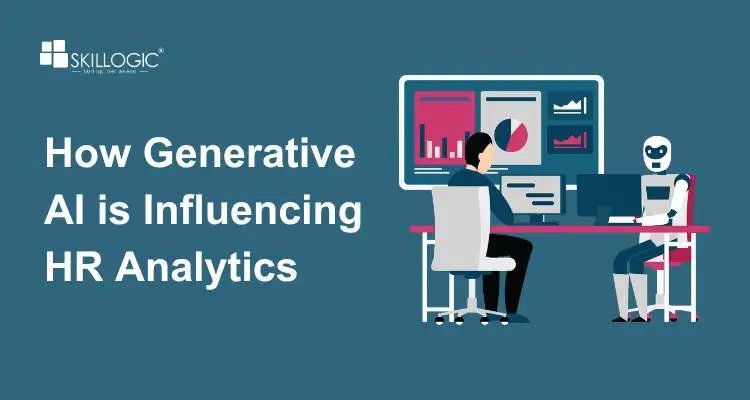
Generative AI is changing how HR teams analyze employee data, prepare reports, and understand workforce trends. By helping automate routine tasks and summarize large amounts of information, it allows HR professionals to focus more on interpreting insights and supporting better decisions. However, its effective use also depends on data quality, privacy, and human oversight.
Here, we will explore the key applications, benefits, challenges, and future of generative AI in HR analytics.
Understanding Generative AI in HR Analytics
HR teams manage large amounts of employee, recruitment, performance, and training data. Analyzing this information manually can be time-consuming, which is where generative AI in HR analytics becomes useful.
Generative AI helps HR professionals summarize information, identify patterns, prepare reports, and understand employee feedback. For example, it can summarize employee survey responses to highlight common concerns and support better decisions.
However, AI-generated insights must be verified, and human judgment remains essential for accurate and responsible HR decisions.
Key Applications of Generative AI in HR Analytics
Generative AI helps HR teams analyze workforce data, automate routine tasks, and make informed decisions.
Here are the key applications of generative AI in HR analytics:
Employee Data Analysis
Generative AI can summarize employee data, identify workforce trends, and highlight areas that need attention. For example, it can help HR teams investigate rising employee turnover by summarizing relevant reports.
Recruitment and Talent Acquisition
AI can assist with writing job descriptions, preparing interview questions, and summarizing candidate feedback. According to LinkedIn's The Future of Recruiting 2025 report, 37% of organizations were integrating or experimenting with generative AI, while recruiting teams using it saved an average of 20% of their workweek.
Employee Engagement and Retention
AI can analyze employee surveys and feedback to identify common concerns related to workload, management, and career growth. HR teams can use these insights to improve employee satisfaction and retention.
For example, if employees repeatedly mention heavy workloads in survey responses, AI can summarize this feedback so HR teams can investigate the issue and consider appropriate improvements.
Workforce Planning and Performance Analysis
Generative AI can summarize performance reports, identify skill gaps, and help organizations assess future staffing and training needs. These insights can also support HR analytics for performance management by helping HR teams review employee performance trends and identify areas for improvement. HR teams should verify AI-generated findings before making workforce decisions.
Refer these articles:
- HR Analytics for Business Leaders: Making HR a Strategic Partner
- From Excel to AI: A Look at the Best HR Analytics Platforms
- HR Analytics for Leadership Development and Succession Planning
Benefits of Using Generative AI in HR Analytics
The use of generative AI in HR analytics offers several practical benefits when organizations implement it responsibly.
The following are the key benefits of using generative AI in HR analytics:
Faster Data Interpretation
AI tools can summarize lengthy reports and large collections of employee feedback, reducing the time needed for initial analysis. HR professionals can devote more attention to validating findings and planning improvements.
Better Communication of Insights
Not every manager has a background in data analysis. Generative AI can explain complex findings in straightforward language, helping decision-makers understand workforce trends.
Improved Reporting Efficiency
HR teams can use AI to prepare initial drafts of workforce summaries, recruitment reports, and employee survey analyses. Human review is still necessary to verify figures, context, and conclusions.
Support for Data-Informed Decisions
AI can help HR professionals explore workforce questions and identify issues that require further investigation. Combining these insights with verified data and professional experience can support better-informed decisions.
A report by McKinsey & Company, The Economic Potential of Generative AI: The Next Productivity Frontier, identified potential productivity gains from generative AI across several business functions, including human resources-related activities. The actual benefits depend on how organizations integrate the technology into their processes and manage its limitations.
Challenges of Generative AI in HR Analytics
Organizations need to understand the potential limitations of generative AI in HR analytics to ensure its responsible and effective use. The ethics of HR analytics is particularly important when handling sensitive employee information, evaluating performance, and using AI-generated insights to support HR decisions.
The following are the key challenges businesses should consider:
Data Privacy and Security
HR data includes sensitive details such as salaries, performance reviews, and employee records. Organizations must use secure AI tools and protect confidential information.
Bias and Fairness
AI may produce biased results that affect hiring, promotions, or performance evaluations. Regular checks and human oversight help ensure fair decisions.
Inaccurate Results
Generative AI can provide incorrect or misleading information. HR teams should verify AI-generated insights against reliable data before using them.
Limited Human Context
AI may overlook individual circumstances and workplace dynamics. Human judgment remains essential for interpreting findings and making appropriate HR decisions.
How Generative AI Is Transforming HR Analytics
Generative AI is changing how HR teams handle daily activities, interpret workforce information, and communicate findings to decision-makers. Instead of spending most of their time organizing information, HR professionals can use AI-assisted tools to prepare summaries, investigate trends, and support workforce planning.
Here are some key ways generative AI in HR analytics is transforming HR processes:
- Automated Workforce Reporting: AI can summarize employee data, prepare report drafts, and highlight important workforce trends, reducing repetitive manual work.
- Deeper Employee Insights: By summarizing survey responses, feedback, and exit interview comments, AI can help organizations understand employee concerns and identify areas for improvement.
- Smarter Recruitment Analysis: AI can help review recruitment reports, summarize interview feedback, and identify delays in hiring processes, helping recruitment teams improve efficiency.
- Improved Workforce Planning: HR teams can use AI-assisted analysis to explore skills gaps, staffing requirements, and training needs before making workforce plans.
- Accessible Data Interpretation: Generative AI can explain complex workforce information in simple language, making insights easier for managers and other decision-makers to understand.
Industry research also highlights how AI is being applied across HR activities. According to the CIPD's Resourcing and Talent Planning Report 2026, 14% of UK organizations use chatbots to respond to candidate queries, while 13% use AI to recommend interview appointment times. AI adoption in selection and workforce planning stood at 11% each, followed by talent pool management at 10%. Sourcing and management information were among the less common applications, at 8% each.
These figures show that organizations are adopting AI for specific HR tasks at different rates. As adoption develops, generative AI in HR analytics may help businesses connect workforce information more effectively and make insights easier to use in planning. However, organizations must validate AI-generated findings, protect employee information, and maintain human oversight to ensure that decisions remain accurate and fair.
Refer these articles:
- How to Become a Business Analytics Expert in India
- Business Analytics Scope in India
- How much is the Business Analytics Course Fee in India
Future of Generative AI in HR Analytics
The future of generative AI in HR analytics is likely to involve greater integration with HR information systems, employee service platforms, workforce planning tools, and business intelligence solutions. These integrations may help organizations summarize reports, explore workforce questions, and access information through natural-language prompts.
Another possible development is the wider use of AI assistants that help employees find answers to routine HR questions, understand training options, or navigate workplace policies. HR teams may also use AI to prepare workforce scenarios and explain trends to managers.
The market outlook reflects growing commercial interest in these capabilities. Mordor Intelligence estimates that the generative AI in the human resources market is expected to reach USD 2.75 billion in 2026. It is projected to reach USD 7.97 billion by 2031, representing a compound annual growth rate (CAGR) of 23.67% from 2026 to 2031.
This projected growth suggests that organizations and technology providers expect generative AI to play a larger role in HR processes. However, market growth does not guarantee that every application will deliver the same benefits. Results will depend on data quality, implementation, employee trust, and the ability to measure improvements.
As these technologies develop, HR professionals may need stronger skills in workforce data analysis, reporting, and AI-assisted decision-making. An HR analytics course can help learners develop these capabilities and understand how workforce data supports informed HR planning and business decisions.
Organizations will also need clear governance. They should define which tasks AI can support, which decisions require human approval, how sensitive information is protected, and how outputs are checked for accuracy.
Businesses that combine reliable workforce data, appropriate AI tools, clear policies, and human oversight will be better positioned to gain practical value from these technologies. The goal should not simply be to automate HR tasks, but to improve the quality and usefulness of workforce decisions.
In short, generative AI in HR analytics is helping organizations summarize workforce information, improve reporting, understand employee feedback, and support planning. Industry reports indicate growing interest in AI for recruitment and HR activities, while market forecasts point to continued investment in generative AI solutions. However, organizations must address privacy, bias, and accuracy before relying on AI-generated insights. By combining suitable AI tools with strong analytical skills and human oversight, HR teams can use workforce data more effectively while keeping people at the center of their decisions.
SKILLOGIC offers an industry-focused HR Analytics course designed to help learners develop practical skills in workforce data analysis, HR metrics, people analytics, recruitment analytics, employee performance evaluation, and HR dashboard creation. Through hands-on projects and real-world case studies, learners gain practical exposure to applying analytics in HR functions. The program also includes industry-recognized certifications, including IABAC certification. With expert trainers and training centers across India, including Bangalore, Chennai, Coimbatore, Hyderabad, Ahmedabad, Pune, Mumbai, and Delhi, SKILLOGIC supports aspiring HR and analytics professionals in building industry-relevant skills.