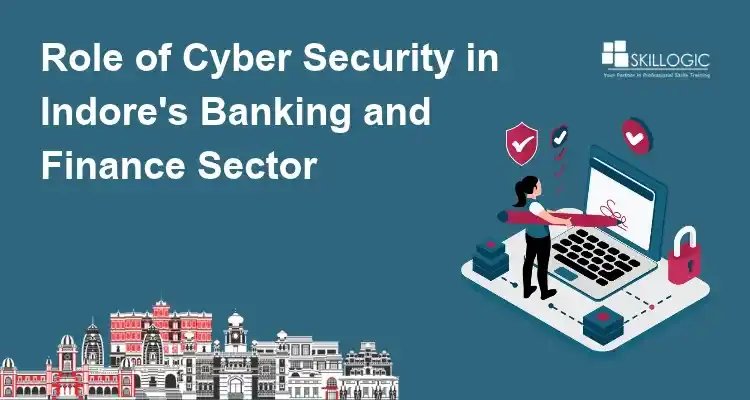
Role of Cyber Security in Indore's Banking and Finance Sector
Explore the role of cyber security in Indore's banking and finance sector, common cyber threats, fraud prevention methods and essential security practices.
 Nashid Hussain CN
Indore is a growing commercial and business centre in Madhya Pradesh, where banks, financial institutions, startups and businesses are increasingly adopting digital services. Online banking, UPI payments and mobile banking have made financial transactions easier, but they have also increased the risk of cyber threats.
As cybercriminals target banking applications, customer accounts and financial data, cyber security in banking sector indore and cyber security in finance sector indore have become essential for protecting financial transactions, preventing fraud and maintaining customer trust.
Madhya Pradesh is also developing its IT and technology ecosystem. According to Invest Madhya Pradesh, the state has more than 2,000 IT/ITES units, 1,200+ technology startups and over 150,000 tech jobs. This growing digital ecosystem increases the importance of protecting business networks, financial applications, and sensitive customer information.
Here, we will explore the role of cyber security in Indore's banking and finance sector, common cyber threats, and the best cyber security practices financial institutions can follow.
Role of Cyber Security in Banks and Financial Businesses in Indore
Cyber security plays an important role in protecting financial institutions from online threats. It helps banks maintain secure operations, protect customer information, and prevent unauthorized access to financial systems. Strong cyber security in banking sector in Indore also supports the safe use of digital banking services by customers and businesses.
Some important roles of cyber security in the banking and finance industry include:
Protecting Customer Financial Information
Banks collect sensitive information such as account details, personal identification, transaction records and payment information. Cyber security technologies such as encryption, access control and secure authentication help prevent unauthorized access to this data.
Preventing Online Banking and UPI Fraud
Fraudsters use fake payment requests, phishing messages and fraudulent websites to steal banking credentials. Effective cyber security in finance sector indore helps financial institutions identify suspicious activities and reduce the risk of unauthorized transactions.
Securing Digital Payment Platforms
Local businesses, retailers and customers increasingly depend on UPI, mobile banking and online payment applications. Network monitoring, secure APIs and transaction verification help protect these platforms against cyber threats.
Reducing Financial Losses
Cyberattacks can result in financial losses, operational disruptions and damage to an organisation's reputation. Regular security assessments and continuous monitoring help identify vulnerabilities before attackers exploit them.
Improving Customer Confidence
Customers expect banks to keep their financial information safe. Strong security practices help build trust and encourage people to use digital banking services confidently. This makes cyber security in banking sector indore essential for the long-term growth of digital financial services.
Explore these articles:
- What Is OWASP Top 10 in Cyber Security and How Does It Work
- Top 10 Cybersecurity Frameworks: A Complete Guide to Types, Benefits, and Uses.
- Why Linux Skills are Important for Cyber Security Professionals
Common Cyber Security Threats Facing Banks and Financial Businesses in India
Banks and financial businesses face different cyber threats that can affect their customers, employees and digital infrastructure. According to CERT-In-related findings, several threats involving malicious scanning, probing and vulnerable services have been detected across India's banking and financial sectors.
A Times of India report published on August 8, 2026, titled 9 lakh cyber attacks detected in India's banking and healthcare sectors, reported that CERT-In detected 5,70,108 incidents involving malicious scanning, probing and vulnerable services targeting the banking sector in 2025. The number reached another 3,48,607 during January to June 2026. The finance sector also recorded 4,70,445 such incidents in 2025 and 3,09,288 in the first six months of 2026.
These figures highlight the importance of cyber security in finance sector indore and across the country. These are detected security-related activities, not all confirmed successful cyberattacks.
Some common threats include:
- Phishing and Social Engineering: Attackers send fake emails, SMS messages and banking alerts to trick customers into sharing passwords, OTPs and other confidential information.
- UPI and Online Payment Fraud: Fraudsters use fake QR codes, payment requests, and remote-access applications to manipulate customers and steal money from their accounts.
- Ransomware and Malware Attacks: Ransomware can lock important financial files and disrupt banking operations. Malware can also steal login credentials and monitor user activities.
- Data Breaches and Unauthorized Access: Weak passwords, outdated software, and misconfigured systems can expose customer information and confidential financial records.
- Attacks on Fintech Companies: Digital lending platforms, payment gateways, and financial technology companies may become targets because they process large amounts of customer and transaction data.
Cyber Security Best Practices for Banks and Financial Businesses in Indore
Financial institutions need a proactive approach to protect their digital infrastructure. Implementing suitable security measures helps reduce risks and improve business continuity. Effective cyber security in banking sector indore requires a combination of modern technologies, employee awareness and regular security assessments.
Here are some important practices banks and financial businesses should follow.
Implement Multi-Factor Authentication
Multi-factor authentication adds an extra layer of protection to banking applications and employee accounts. It makes unauthorized access more difficult, even if login credentials are compromised.
Use Data Encryption
Encryption protects sensitive financial information during storage and transmission. Banks should use appropriate encryption methods to secure customer records and payment information.
Adopt AI-Powered Fraud Detection
Artificial intelligence can help identify unusual transaction patterns, suspicious login attempts and potentially fraudulent activities. Real-time monitoring allows security teams to investigate threats more quickly.
Conduct Regular Vulnerability Assessments
Banks should regularly evaluate their networks, applications and servers to identify security weaknesses. Penetration testing helps discover vulnerabilities before cybercriminals can exploit them.
Strengthen Network and Application Security
Firewalls, intrusion detection systems, endpoint protection and secure application development practices help protect financial infrastructure against unauthorized access.
Provide Employee Cyber security Training
Employees should understand phishing attacks, password security, social engineering and safe data-handling practices. Regular awareness programmes can reduce security risks caused by human errors.
Follow Applicable RBI and CERT-In Requirements
Financial institutions must follow relevant regulatory cyber security directions, incident reporting requirements and security guidelines. Under CERT-In's April 2022 directions, specified cyber incidents must be reported within six hours of noticing them by entities covered by the directions.
These practices are important for cyber security in finance sector indore, particularly as financial services become increasingly dependent on connected digital systems.
Read these related articles:
- Cyber Security Career Scope in Indore
- How Much is the Cyber Security Course Fee in Indore
- How To Choose Best Institute For Cyber Security in Indore
In Short, Indore's growing digital economy and increasing use of online financial services make cyber security essential for the banking and finance industry. From protecting customer information and preventing UPI fraud to securing financial applications, strong security practices help financial institutions reduce risks and maintain customer trust.
As digital payments continue to grow, cyber security in banking sector Indore and cyber security in finance sector Indore will become increasingly important. Banks and financial businesses should focus on continuous monitoring, employee awareness, vulnerability assessments and updated security technologies to create a safer digital financial environment.
For individuals interested in this growing field, enrolling in a cyber security course in Indore can help develop practical skills in ethical hacking, network security, vulnerability assessment and threat detection. Professional training with hands-on labs and real-time projects can prepare learners for various cyber security career opportunities.
SKILLOGIC offers the AI-Powered Cyber Security Professional Plus Course, providing practical training in ethical hacking, penetration testing, SOC operations, and network security through hands-on labs and real-world projects. With 15+ years of experience and 25+ offline centres across India, SKILLOGIC is among the best institutes in India for cyber security courses.
Students gain industry-relevant skills and receive certifications from NASSCOM FutureSkills, IIFIS and SKILLOGIC Course Completion Certification. Its training centres across Bengaluru, Chennai, Hyderabad, Pune, Mumbai, Coimbatore, Ahmedabad, Delhi and Nagpur provide aspiring professionals with opportunities to develop practical cyber security skills.