What is Predictive Marketing Analytics? A Beginner's Guide
Learn what predictive marketing analytics is, how it works, its key benefits, and how businesses use data to forecast customer behaviour and improve marketing decisions.
 Aiswarya N
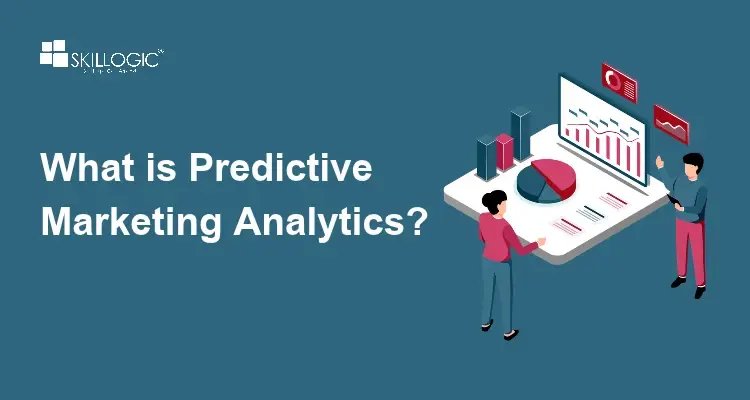
Marketing teams collect information from website visits, email campaigns, social media, online purchases, and customer interactions. However, understanding what has already happened is only one part of making better marketing decisions. Businesses also need to estimate what customers might do next and how future campaigns could perform.
This is where predictive marketing analytics becomes useful. It helps marketers study historical data, recognise patterns, and estimate future customer behaviour. These predictions can guide decisions about campaign planning, audience targeting, and customer retention.
In this guide, we’ll explore how predictive marketing analytics works, its common techniques, industry applications, use cases, and tools.
What is Predictive Marketing Analytics?
Predictive marketing analytics uses historical marketing data, statistical methods, and machine learning to estimate future customer behaviour and campaign outcomes. Unlike traditional analysis, which focuses on past performance, it helps marketers anticipate what might happen next.
The growing interest in data-driven decision-making is also reflected in the wider marketing analytics market. According to Grand View Research, the global marketing analytics software market is projected to grow from USD 6.4 billion in 2026 to USD 12.5 billion by 2030. Although this market includes marketing analytics software beyond predictive solutions, it highlights the increasing role of analytics in marketing decisions.
For example, an online store can analyse previous purchases and browsing patterns to predict which customers may be interested in related products.
Predictive analytics in marketing helps businesses identify potential buyers, anticipate customer needs, and plan relevant campaigns. However, predictions are estimates, not guarantees, as customer behaviour and market conditions can change.
Refer these articles:
- How to Use Marketing Analytics in the Financial Services Industry
- The Role of Machine Learning in Marketing Analytics
- How to Use Power BI & Tableau for Marketing Insights
How Does Predictive Marketing Analytics Work?
The process involves several steps, from collecting customer information to using predictions in marketing activities.
Here’s how predictive marketing analytics works:
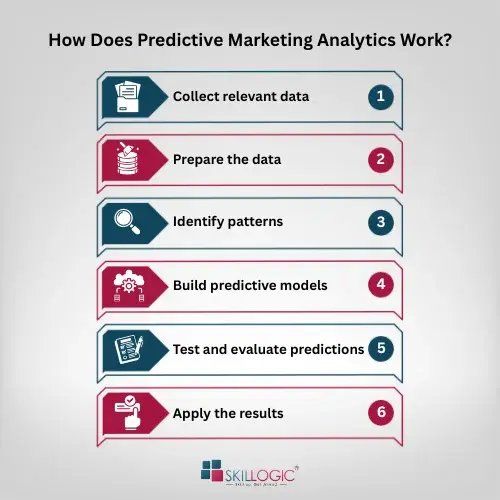
Step 1: Collect relevant data
Marketers gather information from sources such as website activity, purchase history, email engagement, customer relationship management (CRM) systems, and previous advertising campaigns. The usefulness of the results depends partly on whether this information is accurate and relevant to the prediction being made.
Step 2: Prepare the data
Collected information may contain duplicate records, missing values, or inconsistent formats. Before analysis, marketers need to organise the data and correct problems where possible. They must also ensure that customer information is collected and used appropriately.
Step 3: Identify patterns
The next step is to examine relationships within the data. For instance, customers who repeatedly visit a product page, compare prices, and add items to their carts may show a stronger purchase intention than visitors who leave immediately.
These patterns help analysts identify which behaviours may be useful for predicting future actions.
Step 4: Build predictive models
Analysts apply statistical techniques or machine learning algorithms to historical data. These predictive marketing models learn from past examples and estimate the likelihood of a particular outcome, such as a purchase, subscription cancellation, or response to a campaign.
Step 5: Test and evaluate predictions
Before relying on a model, marketers should compare its predictions with actual outcomes. They can measure how accurately it identifies likely buyers or estimates future sales and make adjustments when its performance is poor.
Step 6: Apply the results
Finally, marketers use the findings to guide practical decisions. They might prioritise promising leads, create customer segments, adjust campaign timing, or identify customers who need additional engagement.
Common Techniques Used in Predictive Marketing Analytics
Different marketing questions require different analytical techniques. Understanding these methods helps beginners see how predictions are created.
Here are the main techniques used to analyse marketing data and predict future customer behaviour:
Regression analysis
Regression analysis estimates numerical values, such as future sales revenue or customer lifetime value. For example, a business can study historical sales, advertising expenditure, and seasonal patterns to estimate its revenue for the next quarter.
Classification
Classification predicts which category an observation is likely to belong to. A marketing team might use it to identify whether a lead is likely to convert or whether a customer may respond to a promotional email.
Clustering
Clustering groups customers based on similarities in their behaviour or characteristics. A retailer could identify groups of frequent buyers, occasional shoppers, and customers who primarily purchase during discounts. These groups can help the marketing team plan relevant campaigns.
This technique also supports customer segmentation in marketing analytics, allowing businesses to group audiences according to shared purchasing habits, engagement levels, or preferences. Marketers can then develop more relevant messages for each segment.
Time-series forecasting
Time-series forecasting uses data collected over time to estimate future values. It can help marketers anticipate seasonal demand, website traffic, or monthly sales by examining previous patterns and trends.
Propensity modelling
Propensity modelling estimates how likely a customer is to take a specific action. Examples include making a purchase, clicking an offer, or renewing a subscription. Marketers can use these estimates to prioritise audiences for suitable campaigns.
The choice of technique depends on the business question, available data, and the accuracy required. A complex model is not always the best option, especially when a simpler method can provide a reliable and understandable result.
Where is Predictive Marketing Analytics Used?
Predictive marketing analytics helps businesses anticipate customer behaviour and make informed marketing decisions across different industries.
The following industries use predictive marketing analytics to understand customer behaviour, forecast demand, and improve marketing decisions:
- E-commerce: Online stores analyse browsing history and previous purchases to predict customer interests, recommend products, and plan personalised offers. The e-commerce marketing analytics can combine these insights with predictive models to estimate purchase likelihood, identify potential repeat customers, and improve product recommendations.
- Retail: Retailers use past sales and seasonal trends to forecast demand, plan promotions, and improve product availability.
- Banking and financial services: Financial service providers analyse customer interactions and product usage to identify retention opportunities and recommend relevant services.
- Travel and hospitality: Hotels and airlines use booking history, seasonal patterns, and customer preferences to forecast demand and plan targeted offers.
- SaaS and subscription businesses: Subscription companies analyse product usage and renewal history to identify customers who may cancel and plan suitable retention activities.
- Digital advertising: Advertising teams study previous campaign results and audience behaviour to improve audience targeting, budget allocation, and campaign performance.
The wider interest in data-driven marketing is also reflected in market research. According to Grand View Research's marketing analytics software market report, the global market’s projected growth from USD 6.4 billion in 2026 to USD 12.5 billion by 2030. These figures relate to marketing analytics software overall, rather than predictive marketing analytics alone.
Common Use Cases of Predictive Marketing Analytics
Predictive marketing analytics helps businesses anticipate customer actions and improve marketing decisions.
Common use cases of Predictive Marketing Analytics include:
Lead scoring
Lead scoring estimates which potential customers are most likely to convert by analysing website engagement, email responses, and previous conversion patterns. This helps sales and marketing teams prioritise follow-ups.
Customer churn prediction
Businesses analyse customer activity and usage patterns to identify those who may stop purchasing or cancel subscriptions. These insights help teams plan suitable retention activities.
Product recommendations
By studying browsing history and previous purchases, predictive systems suggest products that match customer interests, improving the relevance of recommendations.
Campaign optimisation
Marketers use past campaign results and audience behaviour to identify promising audiences, messages, and channels, then adjust campaigns based on performance.
Sales forecasting
Historical sales, seasonal trends, and pricing data help businesses estimate future revenue and plan marketing activities accordingly.
Customer lifetime value prediction
Businesses estimate the potential long-term value of customers to guide retention efforts and decide where additional marketing investment may be worthwhile.
The growing use of predictive analytics also reflects its increasing importance across industries. According to Technavio’s Global Predictive Analytics Market Industry Analysis, the global predictive analytics market is projected to record an incremental growth of $75.11 billion between 2026 and 2030, at a compound annual growth rate (CAGR) of 33.6%. This projected growth highlights the increasing role of machine learning and large volumes of data in helping organisations forecast outcomes and make informed decisions. In marketing, these capabilities can help businesses anticipate customer behaviour, improve campaign planning, and allocate resources more effectively.
Refer these articles:
- How to become a Business Analyst in India
- Business Analytics Scope in India
- How to Become a Business Analytics Expert in India
Predictive Marketing Analytics Tools
The right software depends on whether a marketer needs ready-made predictions, customer-level insights, or the flexibility to build custom models.
Here are 6 predictive marketing analytics tools worth understanding:
1. Google Analytics 4 (GA4)
GA4 helps marketers understand website and app activity, including traffic sources, engagement, and conversions. Eligible properties can also access predictive metrics, such as purchase probability and churn probability, when they meet Google's requirements.
This makes GA4 useful for marketers who want to connect customer behaviour with potential future actions.
2. Microsoft Excel
Excel is useful for organising marketing data, exploring trends, and building basic forecasts with formulas, charts, and statistical features. It is a practical starting point for beginners learning how historical campaign results can inform future estimates.
However, Excel is not a dedicated predictive marketing platform, and more advanced modelling may require specialised software.
3. DataRobot
DataRobot provides automated machine learning capabilities that help users develop and evaluate predictive models. Marketing analysts can apply these capabilities to suitable datasets for tasks such as churn prediction, conversion likelihood, and customer value estimation.
The results depend on the quality of the data, the selected target, and the model's evaluation.
4. Adobe Analytics
Adobe Analytics supports detailed analysis of customer journeys, audience behaviour, and digital interactions. When combined with relevant Adobe Experience Platform and AI capabilities, customer insights can support predictive audience analysis and personalised marketing decisions.
Its predictive capabilities depend on the specific Adobe products and integrations being used.
5. Salesforce Marketing Cloud
Salesforce Marketing Cloud supports customer segmentation, campaign automation, and personalised customer journeys. Depending on the products and AI features available, marketers can use customer insights and predictive capabilities to guide audience selection, engagement, and campaign decisions.
It is particularly relevant to businesses managing customer communications across multiple channels.
6. H2O.ai
H2O.ai provides machine learning tools for developing predictive models from structured data. Marketing analysts can use suitable datasets to build models for customer churn, conversion likelihood, and other marketing outcomes.
Unlike a ready-made marketing dashboard, it generally requires users to understand the modelling process and prepare appropriate data.
When comparing predictive marketing analytics tools, look beyond the number of features. Consider the type of predictions available, integration with existing marketing systems, ease of use, data requirements, and the ability to evaluate model performance. Some platforms offer built-in predictions, while others help analysts build custom models.
In short, Predictive marketing analytics helps businesses move beyond reviewing past campaign results and make informed estimates about future customer behaviour. By combining historical data, appropriate analytical techniques, and suitable software, marketers can improve lead prioritisation, customer retention, sales forecasting, and campaign planning.
Successful implementation requires more than choosing a tool. Businesses need relevant data, suitable predictive models, regular performance checks, and responsible handling of customer information. Predictions should guide decisions rather than be treated as certain outcomes.
SKILLOGIC is a globally recognised professional training institute offering practical, career-focused programmes. Recognised by Silicon India, the institute has 13 years of training experience, over 2,00,000 learners worldwide, and more than 25 accreditations and industry partnerships, including IABAC, PEOPLECERT, PMP, and ICFQ. With more than 20 training centres across India, SKILLOGIC provides training in Business Analytics, Cyber Security, Project Management, and Quality Management.
SKILLOGIC’s Marketing Analytics Certification Course covers campaign analysis, marketing metrics, customer insights, conversion tracking, and data visualisation through hands-on exercises and real-world projects. With expert guidance, an industry-relevant curriculum, and globally recognised IABAC certification, the programme helps learners develop practical skills to analyse marketing performance and make data-driven decisions. Learners looking for the best marketing analytics certification course can explore the curriculum, practical learning approach, and course details offered by SKILLOGIC.