Cyber Security Risks in 5G-Connected Enterprise Networks
Explore cyber security risks in 5G-connected enterprise networks, including IoT vulnerabilities, network threats, data breaches, and effective security measures.
 Nashid Hussain CN
5G technology is changing how businesses connect devices, manage operations, and exchange information. From smart offices and manufacturing plants to cloud platforms and connected equipment, enterprises are using faster networks to improve productivity and support digital transformation. However, these benefits also introduce new cybersecurity challenges that organizations must understand.
Understanding cyber security risks in 5G - connected enterprise networks is essential for protecting sensitive information, connected devices, and critical business operations. As companies adopt more Internet of Things (IoT) devices and cloud-based services, they need stronger security controls to prevent unauthorized access, data breaches, and network disruptions.
Here, we will discuss the major cyber security risks in 5G-connected enterprise networks, common threats, real-world research findings, and effective strategies to protect business networks from cyber attacks and threats.
What Is 5G and How Do Enterprises Use It?
5G is the fifth generation of mobile network technology. It offers faster data transfer, lower latency, and support for a large number of connected devices. These capabilities allow businesses to automate processes, monitor equipment remotely, and exchange information in near real time.
For example, a manufacturing company can use 5G-connected sensors to monitor production equipment, while a logistics business can track vehicles and inventory through connected systems. Hospitals, warehouses, and offices can also use 5G to support smart devices and digital applications.
Key Features of 5G Enterprise Networks
Some important features of 5G include:
- High-speed connectivity for data-intensive applications.
- Low latency for real-time communication and remote operations.
- Support for large numbers of connected IoT devices.
- Network slicing to support different applications and service requirements.
- Better connectivity for cloud computing and edge computing environments.
These capabilities create new business opportunities, but they also increase the importance of 5G network security. Enterprises must ensure that connected systems are properly configured and protected against emerging threats.
Why Businesses Are Adopting 5G Connectivity
Businesses are adopting 5G to improve operational efficiency, support remote monitoring, and connect distributed locations. Smart factories can use connected equipment to identify performance issues, while logistics companies can share information across vehicles, warehouses, and cloud platforms.
However, faster connectivity does not automatically mean stronger protection. Companies must consider 5G security when integrating new devices, applications, and third-party services into their existing infrastructure.
Explore More Topics:
- Day-to-Day Responsibilities of a Cyber Security Professional: What to Expect
- UPI Frauds and Payment Gateway Scams: How to Stay Safe
- Cyber Security Across Different Industries: Why Every Sector Needs Protection
Why 5G Enterprise Networks Face Increasing Cyber security Risks
Traditional enterprise networks often rely on a defined set of computers, servers, and internal systems. With 5G, businesses can connect thousands of devices, remote locations, cloud services, and industrial systems. Every connected component can potentially become an entry point for attackers if it is not properly secured.
Another challenge is the complexity of modern network infrastructure. Virtualized network functions, software-based controls, and distributed edge systems require continuous monitoring and effective access management.
Research from the National Institute of Standards and Technology (NIST) emphasizes the importance of secure network architecture, privacy protection, and resource isolation in 5G environments. This highlights why organizations need to consider security in 5G from the planning stage rather than treating it as an afterthought.
Source: National Institute of Standards and Technology (NIST)
What Are the Major Cyber Security Risks in 5G-Connected Enterprise Networks
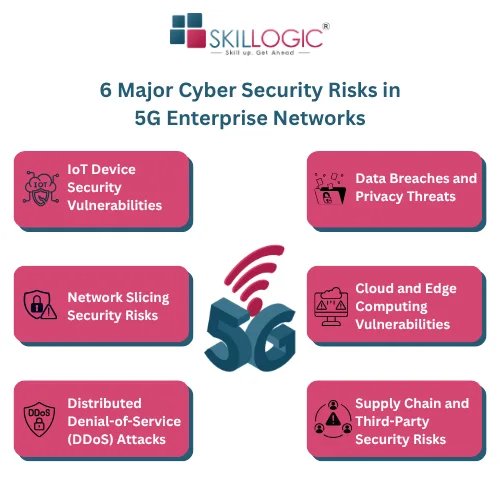
The major cyber security risks in 5G-connected enterprise networks include IoT device security vulnerabilities, network slicing security risks, Distributed Denial-of-Service (DDoS) attacks, data breaches and privacy threats, cloud and edge computing vulnerabilities, and supply chain and third-party security risks. Understanding these threats helps organizations identify weaknesses, protect sensitive information, and implement effective security measures to keep their connected enterprise networks safe.
Cyber Security Risks in 5G Enterprise Networks
1. IoT Device Security Vulnerabilities
5G enables enterprises to connect cameras, sensors, smart meters, industrial machines, and other IoT devices. However, some devices may have weak passwords, outdated software, insecure communication protocols, or limited security features.
Attackers can exploit these weaknesses to gain unauthorized access, steal information, or use compromised devices to attack other systems.
For example, an unsecured sensor in a manufacturing facility could become an entry point into a business network.
Organizations should change default credentials, update device firmware, restrict unnecessary access, and monitor connected devices regularly. These measures are essential for effective 5G network security, particularly in environments with large numbers of connected endpoints.
2. Network Slicing Security Risks
Network slicing allows a 5G infrastructure to support multiple virtual network segments with different performance and service requirements. An enterprise might use separate slices for business applications, industrial equipment, and connected devices.
However, incorrect configurations or weaknesses in isolation mechanisms could create security risks between these environments. If access controls are poorly implemented, an attacker may attempt to move from a less secure segment toward more sensitive systems.
Businesses should enforce strict access policies, test isolation controls, and continuously review network configurations. Properly implemented security of 5G infrastructure requires each network segment to have appropriate protection based on its purpose and risk level.
3. Distributed Denial-of-Service (DDoS) Attacks
A Distributed Denial-of-Service (DDoS) attack attempts to overwhelm a network, server, or application with excessive traffic. Compromised connected devices can be used together to generate malicious traffic and disrupt business services.
For enterprises that depend on real-time applications, even a temporary disruption can affect production, logistics, customer services, or remote operations. Businesses should use traffic monitoring, rate limiting, DDoS protection services, and incident response procedures to reduce these risks.
Because connected infrastructure can generate large volumes of traffic, organizations must evaluate both network capacity and security monitoring when planning 5G and security controls.
4. Data Breaches and Privacy Threats
Enterprise networks frequently handle confidential business records, employee information, customer data, and operational details. If attackers gain unauthorized access to connected systems, they may steal information, misuse credentials, or expose sensitive records.
The risk can increase when organizations use poorly secured applications, weak authentication, or inadequately protected data transfers. Businesses should encrypt sensitive information, implement multifactor authentication, restrict access according to job responsibilities, and maintain clear data protection policies.
Strong 5G security also requires organizations to understand where information is collected, transmitted, stored, and processed across connected devices and applications.
5. Cloud and Edge Computing Vulnerabilities
5G often works alongside cloud and edge computing. Cloud platforms provide scalable computing resources, while edge computing processes data closer to connected devices to reduce latency.
However, these distributed environments can introduce misconfigured services, exposed interfaces, outdated software, and unauthorized access risks. An attacker who compromises an edge device or cloud-connected application may attempt to access other business resources.
Organizations should secure application programming interfaces (APIs), apply regular updates, review cloud permissions, and monitor edge infrastructure. Effective security in 5G environments depends on protecting the entire connected ecosystem, not just the mobile network itself.
6. Supply Chain and Third-Party Security Risks
Enterprise 5G environments depend on telecommunications providers, equipment manufacturers, software vendors, cloud platforms, and managed service providers. A weakness in any part of this supply chain can affect the security of connected business operations.
According to Verizon's 2026 Data Breach Investigations Report, third-party involvement appeared in 30% of analyzed breaches. The report also found that vulnerability exploitation was an initial access method in 20% of breaches. These figures cover broader cyber security incidents and are not specific to 5G networks, but they demonstrate the importance of managing external security risks.
Businesses should assess vendors, verify security requirements, monitor third-party access, and ensure that software and network equipment receive timely security updates. These practices strengthen the overall security of 5G-connected enterprise infrastructure.
Explore These Articles:
- How to Become a Cyber Security Expert in India
- Cyber Security Scope in India
- Cyber Security in India: What You Need to Know
How 5G Security Breaches Can Affect Businesses
5G security breaches can disrupt business operations, cause financial losses, expose sensitive customer data, and damage a company’s reputation. Attacks on 5G-connected networks may also interrupt production, affect connected devices, and create risks for critical business systems.
Financial and Operational Disruptions
If attackers disrupt a connected manufacturing system, warehouse network, or remote monitoring service, normal operations may slow down or stop. Businesses may face recovery expenses, lost productivity, contractual penalties, and unexpected downtime.
Risks to Sensitive Business Data
A successful breach can expose confidential documents, customer records, intellectual property, or operational information. Organizations may also face compliance obligations and loss of customer trust.
These consequences show why cyber security risks in 5G should be included in enterprise risk assessments, business continuity planning, and cybersecurity policies.
Best Practices to Secure 5G Enterprise Networks
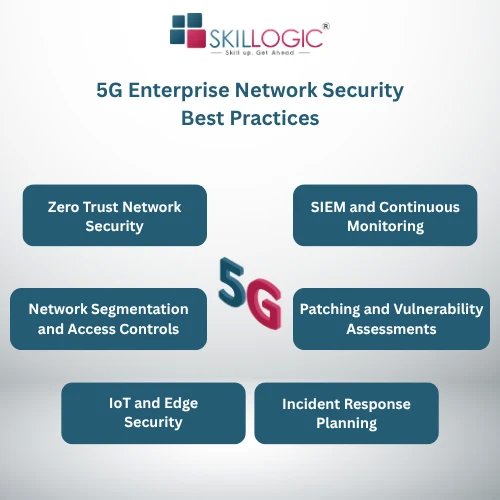
What are the best practices to secure 5G enterprise networks? The best practices to secure 5G enterprise networks include implementing Zero Trust security, monitoring network activity, updating systems regularly, protecting IoT devices, and maintaining an effective incident response plan. These measures help businesses reduce cyber risks and strengthen network security.
Implement Zero Trust Network Security
Zero Trust requires users and devices to be verified before access is granted. Organizations should avoid automatically trusting devices simply because they are connected to an internal network.
Use Network Segmentation and Strong Access Controls
Separate critical systems from less sensitive devices and applications. Apply least-privilege access so users and services receive only the permissions they need.
Monitor Network Traffic with SIEM Tools
Security Information and Event Management (SIEM) tools collect and analyze security logs to help identify suspicious activity. Security teams can investigate unusual connections, repeated login failures, and unexpected traffic patterns.
Apply Regular Patching and Vulnerability Assessments
Update network equipment, operating systems, applications, and IoT firmware. Conduct regular vulnerability assessments to identify weaknesses before attackers can exploit them.
Secure IoT Devices and Edge Infrastructure
Change default passwords, disable unnecessary services, protect management interfaces, and monitor device behavior. Apply appropriate security controls to cloud and edge workloads.
Develop an Incident Response Plan
Prepare procedures for identifying, containing, investigating, and recovering from cyber incidents. Regular exercises help teams understand their responsibilities and respond quickly when a threat occurs.
Together, these measures help enterprises improve 5G network security and reduce the likelihood and impact of cyber incidents.
5G Enterprise Network Security Best Practices
The Role of Cyber Security Professionals in 5G Network Protection
Cyber security professionals help organizations identify vulnerabilities, monitor network activity, investigate suspicious behavior, and respond to security incidents. As 5G connects more enterprise devices and applications, these responsibilities increasingly involve network security, cloud security, SIEM monitoring, threat detection, incident response, Penetration testing and vulnerability assessment.
Professionals with practical knowledge of enterprise networks can help businesses develop stronger defenses and evaluate new security challenges. Understanding 5G and security also helps security teams recognize how connected devices, virtual network infrastructure, and distributed applications interact.
Read Also :
- Cyber Security Careers in Delhi: Essential Skills and Salary Insights
- How Much Is The Cyber Security Course Fee In Delhi
- How to Become a Cyber Security Engineer in Mumbai
- Cyber Security in Mumbai: Market Growth and Industry Insights
In short, 5G technology offers enterprises faster connectivity, improved automation, and new ways to manage business operations. However, IoT vulnerabilities, network slicing weaknesses, DDoS attacks, data breaches, and third-party risks can expose organizations to serious security challenges.
Businesses should combine secure network design, strong access controls, regular updates, continuous monitoring, and effective incident response to reduce these threats. A proactive approach to cyber security risks in 5G can help enterprises benefit from connected technology while protecting their data and operations.
Building expertise in network defense, threat detection, and incident response can help you prepare for emerging cyber security challenges. Choosing a reputable cyber security institute in Delhi or other cities that offers practical labs, industry-relevant skills, and professional guidance can help you build the knowledge needed for a career in 5G network protection.
SKILLOGIC is a reputable institute offering the Cyber Security Professional Plus Course, a 4-month program covering ethical hacking, fraud detection, SIEM, SOC operations, cloud security, and incident response. The course includes hands-on labs, real-time projects, and internship opportunities, along with certifications from NASSCOM FutureSkills and IIFIS and a SKILLOGIC Course Completion Certificate.
For learners seeking practical cyber security training, SKILLOGIC offers training options across cities such as Bangalore, Chennai, Coimbatore, Hyderabad, Pune, Mumbai, Ahmedabad, Nagpur, Delhi, and Kolkata. Those interested in a SKILLOGIC cyber security class in Mumbai can explore available programs to develop practical skills for tackling evolving cyber threats.