Cyber Security Across Different Industries: Why Every Sector Needs Protection
Cyber security is essential across industries to protect data, systems, and operations from cyber threats. Explore security needs in every major sector.
 Nashid Hussain CN
Cyber threats now affect almost every sector, including banking, healthcare, government, e-commerce, manufacturing, education, telecommunications, and energy. As organizations increasingly depend on digital systems, attackers have more opportunities to steal sensitive information, disrupt operations, and carry out ransomware attacks.
This is why cyber security industries now cover a wide range of sectors, with each facing different risks and protection requirements. Banks may focus on transaction security, while hospitals prioritize patient data and medical systems. Understanding these sector-specific risks helps organizations build stronger and more effective security strategies.
Here, we will discuss how cybersecurity protects different industries, the major threats they face, and why organizations need sector-specific security measures.
The Growing Importance of Cyber Security Across Industries
Digital transformation has made organizations more productive, but it has also expanded the attack surface. Cloud platforms, mobile applications, remote access, connected devices, artificial intelligence, and third-party services have created more systems that need protection. Attackers can exploit software vulnerabilities, steal employee credentials through phishing, compromise suppliers, or use ransomware to disrupt business operations.
The importance of cyber security is therefore closely connected to business continuity. Cybersecurity involves protecting identities, applications, networks, endpoints, data, cloud environments, and business processes while preparing organizations to respond when an incident occurs.
The global cybersecurity market reflects this growing demand. According to MarketsandMarkets, the global cybersecurity market is projected to grow from USD 227.59 billion in 2026 to USD 351.92 billion by 2030, representing a 9.1% CAGR. The research highlights ransomware, supply-chain attacks, zero-day vulnerabilities, cloud adoption, and the expanding attack surface as important market drivers.
Cyber threats are also becoming more costly. IBM's recent Cost of a Data Breach Report found that the average global cost of a data breach was USD 4.44 million, compared with USD 4.88 million the previous year.
At the same time, Verizon's Data Breach Investigations Report found that ransomware appeared in 44% of breaches globally, while vulnerability exploitation increased by 34%. These findings show why organizations need continuous monitoring, patching, access controls, and incident response.
Refer these articles:
- Difference Between IDS and IPS in Cyber Security: A Complete Guide
- Day-to-Day Responsibilities of a Cyber Security Professional: What to Expect
- What Is a Fraud Detection System? How It Protects Businesses
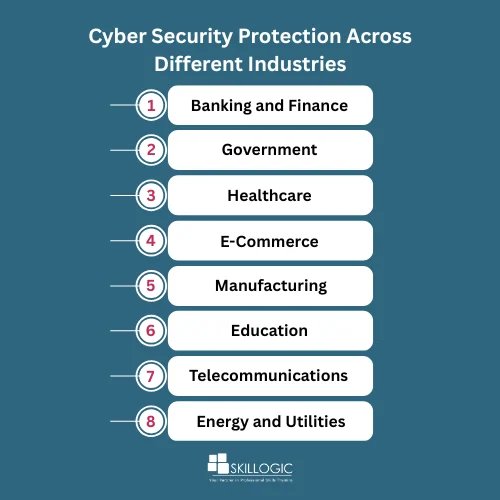
Cyber Security Protection Across Different Industries
Different sectors face different cyber security risks, making sector-specific protection essential.
- Banking and Finance: Financial protection
- Government: Citizen protection
- Healthcare: Patient protection
- E-Commerce: Payment security
- Manufacturing: System protection
- Education: Data security
- Telecommunications: Network security
- Energy and Utilities: Infrastructure security
Cyber Security Protection Across Different Industries
These developments show that cyber security industries are increasingly dependent on proactive protection. Organizations that treat cyber security as a business priority can reduce downtime, protect sensitive information, maintain customer trust, and improve their ability to recover from attacks.
Cyber Security in Banking and Financial Services
Financial institutions are among the most attractive targets for cybercriminals because they manage money, payment information, personal identities, and highly valuable financial records. Online banking, mobile applications, digital wallets, ATMs, payment gateways, and financial APIs have created multiple points that attackers may attempt to exploit.
Cyber security in banking focuses on protecting financial transactions and customer information from threats such as phishing, credential theft, ransomware, malware, account takeover, payment fraud, and insider attacks. Banks commonly use multifactor authentication, encryption, fraud detection systems, security monitoring, privileged access controls, and transaction analytics to identify suspicious activity.
Real-World Example: Bank Cyber Heist
A major example of the risks facing financial institutions is the 2016 Bangladesh Bank cyber heist. Attackers compromised the bank's systems and used fraudulent SWIFT payment instructions to attempt to transfer nearly $1 billion from its account at the Federal Reserve Bank of New York. Although several transactions were stopped, approximately $81 million was successfully transferred. The incident highlighted the importance of securing banking systems, monitoring financial transactions, maintaining network controls, and detecting unusual activity quickly.
This example demonstrates the wider importance of cyber security in financial services. A security incident can result in direct financial losses, regulatory consequences, operational disruption, and damage to customer confidence.
IBM's recent report also found that the average global cost of a data breach was USD 4.44 million, demonstrating the financial impact organizations can face after losing control of sensitive information.
Cyber Security in Government and Public Services
Government organizations manage large amounts of sensitive information, including citizen records, tax information, identity details, public-service data, and information related to critical infrastructure. This makes government networks attractive targets for cybercriminals, hacktivists, and sophisticated threat actors.
Cyber security in government must protect public systems against ransomware, phishing, distributed denial-of-service attacks, espionage, unauthorized access, malware, and data breaches. Security teams also need to protect systems that support essential services, because an attack can affect citizens directly.
Example: Practically a government department that provides an online public-service portal. If attackers compromise administrator credentials, they could potentially alter information, disrupt services, or access confidential citizen records. Strong identity and access management, network segmentation, encryption, continuous monitoring, vulnerability management, and incident response can reduce these risks.
Government security is also becoming more complex because public agencies increasingly rely on cloud services and third-party technology providers. This makes supply-chain security an important part of industry cyber security.
For public organizations, the importance of cyber security extends beyond protecting data. It also involves maintaining public trust and ensuring that essential services remain available during a cyber incident.
Refer these articles:
- How much is the Cyber Security Course Fee in India
- How to Become a Cyber Security Expert in India
- Cyber Security Scope in India
Cyber Security in Healthcare: Protecting Patient Data
Healthcare organizations have become increasingly dependent on digital systems. Hospitals and clinics use electronic health records, connected medical devices, digital appointment systems, laboratory platforms, cloud applications, and online payment services. These technologies improve healthcare delivery but also create valuable targets for attackers.
Cyber security in healthcare is particularly important because patient records can contain highly sensitive personal and medical information. Cybercriminals may use ransomware to disrupt hospital operations, steal patient information, compromise employee accounts, or exploit weaknesses in connected systems.
Real-World Example: Ireland's HSE Ransomware Attack
A major real-world example is the 2021 ransomware attack on Ireland's Health Service Executive (HSE). Attackers used a phishing email to gain access to the HSE network and later deployed Conti ransomware, which encrypted files and disrupted access to IT systems. The attack caused significant disruption to healthcare services, demonstrating how a cyberattack can affect patient care as well as sensitive health information. The incident highlights the importance of phishing awareness, endpoint protection, network segmentation, secure backups, and effective incident response in healthcare organizations.
Healthcare data breaches can also be extremely expensive. IBM reported that the average cost of a healthcare data breach reached USD 7.42 million in recent years, making healthcare the highest-cost industry for breaches for the 14th consecutive year.
This highlights the importance of cyber security in healthcare not only for privacy but also for operational continuity and patient safety. A cyber security incident affecting a hospital can potentially interfere with services that people depend on immediately.
Cyber Security in E-Commerce and Retail
E-commerce businesses handle large amounts of customer information and online transactions, making them attractive targets for cybercriminals. Cyber Security in E-Commerce and Retail focuses on protecting customer data, payment information, websites, and digital transactions from threats. Key security concerns include:
- Customer Data Protection: E-commerce platforms handle sensitive information such as customer names, addresses, passwords, payment details, and order history, making strong data protection essential.
- Payment and Account Security: Secure payment gateways, encryption, multifactor authentication, and fraud detection help prevent payment fraud, account takeovers, and unauthorized transactions.
- Protection Against Cyber Threats: E-commerce businesses need protection against phishing, ransomware, malware, malicious bots, and data breaches through continuous monitoring and vulnerability testing.
- Third-Party Security: Retailers often rely on payment providers, logistics companies, cloud platforms, and software vendors. Security weaknesses in these connected services can increase the risk of breaches.
Research Report: Verizon's Data Breach Investigations Report found that third-party involvement in breaches had doubled globally, highlighting the growing security risks associated with suppliers and business partners.
Real-World Example: Target Data Breach
A major real-world example is the 2013 Target data breach, in which attackers gained access to the retailer's network through credentials stolen from a third-party vendor. The attackers installed malware on point-of-sale systems and stole payment card information from millions of customers. The incident demonstrated how weaknesses in third-party security can affect large retailers and highlighted the importance of strong vendor controls, network segmentation, access management, continuous monitoring, and payment-system security.
How Industry Cyber Security Protects Businesses and Customers
Effective industry cyber security focuses on the specific risks faced by each sector. Banks protect financial transactions, healthcare organizations protect patient data, while manufacturing and energy companies need to secure operational systems and critical infrastructure. This is why cyber security industries need customized security strategies instead of a one-size-fits-all approach.
Organizations also need skilled professionals who can identify threats, manage security tools, and respond to incidents. IBM's India findings reported an average data-breach cost of INR 220 million, with research, transportation, and industrial sectors recording some of the highest average costs. The ISC2 Cybersecurity Workforce Study also found that 95% of respondents reported at least one cyber security skills needed, highlighting the importance of trained security teams.
Industry Cyber Security Framework
A strong framework can help organizations protect their systems, data, and customers through the following areas:
- Data Protection: Use encryption, secure storage, and access controls to protect sensitive information.
- Identity and Access Management: Ensure only authorized users can access critical systems and data.
- Network and Cloud Security: Secure networks, cloud environments, applications, and connected devices against unauthorized access.
- Threat Detection and Monitoring: Continuously monitor systems to identify suspicious activities, malware, and potential attacks.
- Incident Response: Maintain a clear response plan to detect, contain, and recover from security incidents quickly.
- Risk and Compliance Management: Regularly assess vulnerabilities, manage third-party risks, and follow applicable industry regulations.
- Security Awareness: Train employees to recognize phishing, social engineering, and other common cyber threats.
Industry Cyber Security Framework
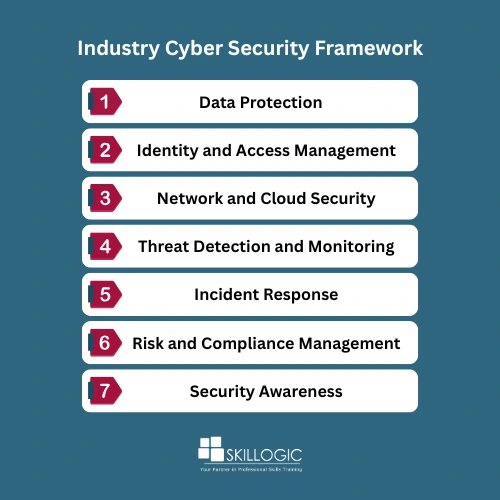
A proactive industry cyber security strategy helps organizations reduce risks, maintain business continuity, protect customer trust, and respond more effectively as cyber threats continue to evolve.
Refer these articles:
- Top Cyber Security Hiring Industries in Hyderabad
- Cyber Security Challenges Facing Hyderabad’s IT Sector
- Cyber Security in Pune: Market Growth and Industry Insights
- Top Cyber Security Hiring Industries in Pune
In short, Cyber threats can affect organizations across banking, healthcare, government, e-commerce, manufacturing, education, telecommunications, and energy. As businesses adopt cloud computing, AI, automation, and connected technologies, the importance of cyber security will continue to grow. Organizations that invest in strong security practices, skilled professionals, continuous monitoring, and effective incident response can better protect their data, customers, and operations.
The expansion of cyber security industries shows that cybersecurity has become a core business requirement rather than an optional function. Building a resilient security environment requires the right combination of technology, employee awareness, risk management, and trained professionals who can respond to evolving threats.
For aspiring cybersecurity professionals, a cyber security training in Hyderabad can help develop practical knowledge and industry-relevant skills in areas such as ethical hacking, network security, threat detection, incident response, and security monitoring. With the right training and hands-on experience, learners can prepare for entry-level cybersecurity roles and build a strong foundation for long-term career growth.
SKILLOGIC offers industry-focused cyber security training through its Cyber Security Professional Plus Course, a 4-month program accredited by IIFIS and NASSCOM FutureSkills. The program combines hands-on labs, real-time projects, internship opportunities, and practical learning in areas such as ethical hacking, fraud detection, SIEM, SOC operations, cloud security, and incident response. With 25+ training centers across India, including cyber security courses in Pune, Bengaluru, Chennai, Hyderabad, Mumbai, and Delhi, SKILLOGIC helps aspiring professionals develop practical, job-ready cyber security skills and prepare for careers in the growing cybersecurity industry.