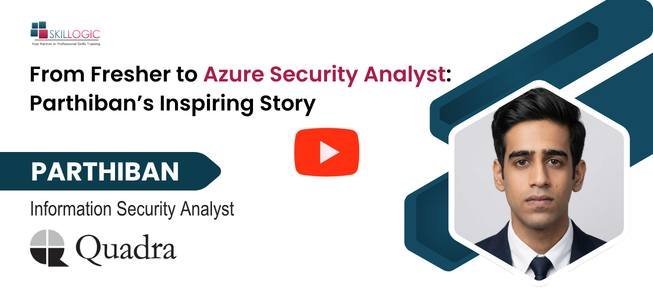
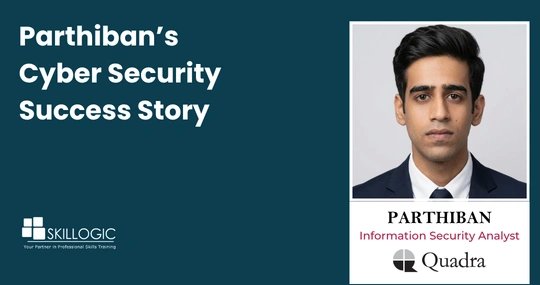
From Fresher to Azure Security Analyst: Parthiban’s Inspiring Story
Discover how Parthiban transformed from a non-technical fresher into an Azure Security Analyst. Learn how the right guidance, hands-on training, and consistent effort helped him build a successful cyber security career in India.
 Nashid Hussain CN
The cyber security industry in India is growing at a rapid pace, creating strong career opportunities even for non-technical graduates. According to recent reports by Grand View Research, the Indian cyber security market is expected to reach over USD 13–15 billion by 2027, with a steady annual growth rate of around 18–20%. At the same time, India is facing a shortage of skilled cyber security professionals, which makes it an ideal field for freshers and career switchers. This growing demand is encouraging many individuals to explore structured learning paths and build careers in cyber security domains like SOC analysis, penetration testing, and cloud security.
One such inspiring journey is of a non-technical graduate who successfully transitioned into the cyber security field and secured a role as a Azure Security Analyst at Quadra Systems Pvt. Ltd. With no prior technical background, the candidate overcame challenges through consistent learning, hands-on project experience, and proper mentorship. This story highlights how the right approach and guidance, especially from a top cyber security institute in India can help anyone break into the cyber security industry, regardless of their educational background.
Let’s explore how this transformation happened step by step and what you can learn from it.
From Fresher to Azure Security Analyst: Parthiban’s Inspiring Story
In this article, we explore how Parthiban transitioned from a non-technical fresher to an Azure Security Analyst at Quadra Systems Pvt. Ltd. With the support of SKILLOGIC, structured training, and hands-on project experience, he was able to build strong foundations in cyber security and cloud security. Despite coming from a visual communication background, his consistent efforts and willingness to learn helped him gain the technical skills required to enter the industry.
His journey highlights the importance of focused learning, practical exposure, and the right mentorship. From struggling to find direction after graduation to successfully starting a career in cyber security, Parthiban’s story proves that with dedication and proper guidance, even beginners can confidently step into roles like Security Analyst and build a successful future in the cyber security domain. This kind of transformation is possible through structured programs like SKILLOGIC’s cyber security courses in Hyderabad, which focus on hands-on training, real-time projects, and industry-relevant skills to help learners become job-ready.
Q1. Can you tell us about your background before entering cyber security?
I come from a completely non-technical background. I completed my BSc in Visual Communication in 2020, which mainly focused on photography and cinematography. After graduation, I struggled to find a stable career path. I worked in a few non-technical roles like sales for almost a year, but nothing really worked out. That’s when I realized I needed to shift into a field with better career opportunities.
Q2. What made you choose cyber security as a career?
I have had an interest in cyber security since childhood. In 2023, I finally decided to take it seriously and build a career in it. Initially, I tried learning on my own through YouTube, but I found it very confusing because cyber security is a vast field and lacks structured guidance online. That’s when I decided to join a professional training institute.
Q3. How was your learning experience as a non-technical student?
At first, I had doubts because I didn’t have any technical background. But the training started from the basics, which made it easier for me to understand. The course was a mix of theory and practical sessions, which helped me build strong Network Security fundamentals. The trainer was very supportive and explained concepts in a simple way, making learning smooth and stress-free.
Q4. Did you face any challenges during your course?
Yes, I did face a major challenge in the beginning. After just 5 days of classes, I met with an accident and had to take a break for a month. However, the institute was very supportive and allowed me to restart my classes from the beginning. Apart from that, learning technical concepts was sometimes difficult, but with proper guidance, I managed to overcome those challenges.
Q5. How much time did you dedicate daily to learning?
My classes were around 2 to 2.5 hours daily. After that, I used to spend another 2 to 3 hours revising and practicing what I learned. I focused on consistent learning rather than studying for long hours. This approach helped me understand concepts better without feeling overwhelmed.
Q6. How were your doubts and questions handled during the course?
Whenever I had doubts, I could directly contact my trainer. There was also a WhatsApp group where we discussed queries. The trainer guided us step-by-step and ensured that we didn’t feel lost. This kind of support made a big difference, especially for someone from a non-technical background like me.
Q7. Can you explain your project experience?
Initially, the project phase was a bit confusing because it involved hands-on cyber security tools. But we worked as a team and also got constant support from the trainer. We completed two projects within a month. These projects helped me gain practical exposure and boosted my confidence significantly.
Q8. How important were projects for your job placement?
Projects played a crucial role in my placement. In fact, more than 75% of the questions in my interview were based on my project. Since I had worked on it practically, I was able to answer confidently. I strongly believe that focusing on projects is very important for anyone entering cyber security.
Q9. How was your interview experience?
I attended only one interview, and luckily, I got selected. The process had four rounds, including technical discussions. I was a bit nervous since it was my first technical interview, but most of the questions were from topics I had already learned during my training. So, it went smoothly.
Q10. What advice would you give to beginners in cyber security?
Cyber security is a huge field, so don’t try to learn everything at once. Focus on one domain, like SOC analyst, Vulnerability Assessment and Penetration Testing, and build your skills step by step. Having proper guidance and a structured learning path is very important. Consistency and practice matter more than studying long hours.
Key Takeaways from Parthiban’s Cyber Security Career Journey
Parthiban’s journey highlights the importance of structured learning, consistency, and the right mentorship in building a successful career in cyber security, even from a non-technical background.
- Starting from the basics helped Parthiban build a strong foundation in networking, security concepts, and cloud technologies despite not having a technical degree.
- Focused training and step-by-step guidance made it easier for him to understand complex cyber security topics without feeling overwhelmed.
- Hands-on practice and real-time projects played a major role in improving his practical knowledge and boosting his confidence.
- Consistent daily learning and revision helped him gradually develop the cyber security skills required for an Azure Security Analyst role.
- Working on projects made a huge difference during interviews, as most questions were based on his practical experience.
- Proper mentorship and support from trainers helped him overcome challenges and stay on the right learning path.
- Cyber security, especially cloud security roles like Azure Security Analyst, offers excellent career opportunities for freshers willing to learn and grow.
In short, this journey proves that even a non-technical student can successfully build a career in cyber security with SKILLLGIC’s right guidance, consistent effort, and practical learning. The key is to stay focused, avoid confusion, and keep upgrading your skills as technology evolves.
Leading cyber security institutes in India are gaining popularity due to the city’s strong IT ecosystem, offering practical training, real-time labs, and placement support for aspiring professionals. Across India, cyber security training programs are helping students and freshers build in-demand skills and start successful careers in this rapidly growing field.
SKILLOGIC provides career-focused cyber security training that helps learners build practical skills in areas like ethical hacking, SOC operations, and threat detection. The training is designed with a strong focus on hands-on practice, so students can understand real-world scenarios better. With the support of experienced trainers, learners gain the confidence and knowledge needed to become job-ready. Those who want to start their journey can choose a cyber security course in Pune to develop the right technical skills.
SKILLOGIC has training centers in major cities across India, including Bangalore, Hyderabad, Chennai, Coimbatore, Delhi, Mumbai, Nagpur, Ahmedabad, and Pune, making it easier for students to access quality education. The programs are backed by recognized certifications and accreditations from NASSCOM FutureSkills, IIFIS, and EC-Council. After completing the course, students receive a SKILLOGIC certification, which adds value to their career profile.