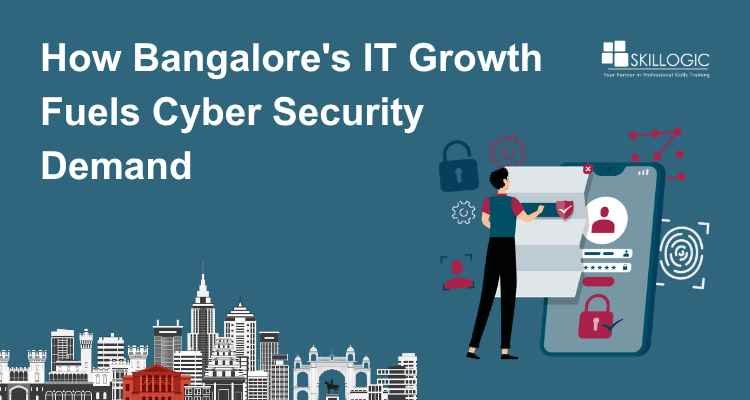
How Bangalore's IT Growth Fuels Cyber Security Demand
Explore how Bangalore’s IT growth is increasing cyber security demand, creating new career opportunities, expanding job roles, and shaping the future of cyber security in the city’s IT sector.
 Aiswarya N
Bangalore has long been known as India’s IT capital. Over the years, the city has grown from a technology destination into a large ecosystem of software companies, startups, global tech centers, and digital services. This growth has changed how businesses operate and has also increased the need to secure systems, applications, and business data.
As a result, the conversation around cyber security demand in Bangalore’s IT sector has become more important than ever, especially for students and aspiring professionals exploring careers in technology.
Here we will understand how Bangalore’s IT sector growth is fueling the rising demand for cyber security in the city’s technology ecosystem.
Understanding the Growth of Bangalore’s IT Sector
To understand why cyber security is becoming important, we first need to understand how Bangalore’s IT sector reached this scale.
Bangalore’s IT journey started with software services and outsourcing, but today the city supports much more than that. It has become a center for cloud computing, AI development, product engineering, fintech, SaaS, and enterprise technology.
Large business corridors such as Electronic City, Whitefield, Outer Ring Road (Bellandur–Marathahalli belt), Manyata Tech Park, and Embassy TechVillage have become home to thousands of technology teams and global offices.
Major IT companies such as Infosys, Wipro, Tata Consultancy Services, Google, and Microsoft operate significant technology centers in Bangalore, alongside hundreds of Global Capability Centers (GCCs). Karnataka is estimated to host hundreds of GCCs, with Bengaluru contributing the largest share.
The numbers also show how strong this expansion has been.
As reported by The Times of India, Karnataka’s IT exports are projected to cross ₹5.5 lakh crore in the current financial year 2026-27, with Bengaluru continuing to contribute the largest share despite efforts to expand IT growth across other regions of the state. The Times of India report also noted that Karnataka’s cumulative IT service exports have exceeded ₹12 lakh crore over the last 3 years.
Reports also noted that Karnataka’s IT sector recorded around 10.2% growth in the previous financial year, supported by increasing software exports and continued investment in technology infrastructure.
This continued Bangalore IT sector growth has increased digital infrastructure, cloud adoption, and business data. But as companies expand, so do security risks.
Every system, application, and database needs protection, making cyber security in Bangalore’s IT industry an essential business function. This shift is also contributing to rising cyber security demand in Bangalore’s IT sector, which we’ll explore next.
Refer these articles:
- How to Start a Career in Cyber Security
- Top Cyber Security Skills You Need to Master
- Why is Cybersecurity Important
How Bangalore’s IT Growth is Increasing Cyber Security Demand
As Bangalore’s IT ecosystem expands, companies are managing more software products, cloud environments, employee access points, and customer information than before. This growth creates more opportunities, but it also increases the responsibility of protecting digital systems and business operations.
Here are some of the key ways Bangalore’s IT growth is creating greater demand for cyber security across the industry:
More Digital Infrastructure Means More Security Requirements
As companies expand operations across tech parks and business hubs in Bangalore, they build larger technology environments that include applications, cloud platforms, databases, and internal systems. Every new layer of infrastructure increases cyber security demand in Bangalore’s IT sector because businesses need continuous protection and monitoring.
Cloud Adoption Is Creating New Security Challenges
Many IT companies in Bangalore have moved workloads to cloud platforms to improve flexibility and scale operations faster. While cloud adoption improves efficiency, it also creates new cyber security risks related to access control, configuration errors, and data exposure, increasing the importance of cyber security in Bangalore’s IT industry.
Higher Data Usage Increases the Need for Protection
Technology companies process large amounts of employee, customer, and business data every day. Protecting this information has become essential because data breaches can lead to financial losses and operational disruptions. This is another major factor contributing to cyber security demand in Bangalore’s IT sector.
Growing Cyber Threats Are Changing Hiring Priorities
As businesses become more connected, cyber security threats such as phishing, ransomware, credential theft, and unauthorized access continue to increase. Companies are now investing in preventive security measures instead of waiting for incidents to happen, strengthening cyber security in Bangalore’s IT industry.
Global Cyber Security Growth Reflects Local Industry Trends
The rise in cyber security investment is not limited to Bangalore. According to IMARC Group, the global cyber security market is projected to reach USD 676.3 billion by 2034, driven by accelerating digital transformation and the growing frequency of cyber threats. This broader trend also supports the increasing cyber security demand in Bangalore’s IT sector.
Security Teams Are Growing Alongside IT Expansion
Years ago, IT growth mostly created software and infrastructure roles. Today, companies also require security analysts, cloud security specialists, compliance teams, and risk professionals to support operations. This shift shows how closely connected IT expansion and security have become.
This growing focus on protection is creating stronger opportunities for cyber security students and professionals in Bangalore looking to enter the field. As a result, many learners also explore training pathways and compare programs offered by a top cyber security institute in Bangalore to build practical skills aligned with industry requirements.
As companies expand security teams alongside IT operations, students now have more pathways to enter the field. The rise in cyber security demand in Bangalore’s IT sector is creating opportunities across multiple roles.
Refer these articles:
- Cyber Security Scope in India
- Cyber Security in India: What You Need to Know
- How much is the Cyber Security Course Fee in India
Career Opportunities in Bangalore’s Cyber Security Industry
As Bangalore’s IT sector continues expanding, companies are increasing investments in security teams across cloud, software, infrastructure, and enterprise operations. This growth is creating stronger cyber security career opportunities in Bangalore and giving students multiple pathways to enter the field.
Cyber Security Job Roles in Bangalore’s IT Sector
Here are some of the most common cyber security roles available across Bangalore’s IT and IT-enabled companies.
The average salary ranges for the cyber security professionals in Bangalore below are approximate annual figures based on reported compensation data from Glassdoor and may vary depending on company, experience, and skill level.
- SOC Analyst – Monitors security alerts and investigates potential threats. SOC analyst professionals in Bangalore commonly earn around ₹4–8 LPA.
- Cyber Security Analyst – Supports organizations by identifying risks, strengthening security controls, and assisting with incident response. Typical cyber security analyst salaries in Bangalore are around ₹5–9 LPA.
- Cloud Security Engineer – Focuses on protecting cloud platforms, infrastructure, and access management systems. Cloud security engineer salaries in Bangalore generally range from ₹8–15 LPA.
- Ethical Hacker – Tests systems and applications to identify vulnerabilities before attackers exploit them. Ethical hackers professionals in Bangalore in this role often earn around ₹6–12 LPA.
- Application Security Engineer – Works with development teams to secure applications throughout the software lifecycle. Application security engineer salary ranges in Bangalore commonly fall between ₹8–16 LPA.
- Cyber Security Consultant – Helps businesses improve security practices and reduce operational risks. Cyber security consultant professionals in Bangalore often earn approximately ₹7–14 LPA.
These opportunities show how cyber security in Bangalore’s IT industry has expanded beyond traditional IT support roles and now includes multiple specialized career paths for aspiring professionals.
Students planning to enter this field also often compare training options and evaluate the cyber security course fees in Bangalore before selecting programs that align with their career goals and practical learning requirements.
Refer these articles:
- How to Become a Cyber Security Expert in Bangalore
- How to Choose the Best Institute for Cyber Security in Bangalore
- Cyber Security Career in Bangalore: Skills, Salaries, and Success Tips
In short, Bangalore’s IT growth is creating greater demand for secure systems, data protection, and specialized security teams across industries. As companies continue expanding, cyber security is becoming an essential part of business operations. This shift is opening new career opportunities for students and professionals looking to build a future in the field.
As Bangalore’s IT sector continues expanding, the need for professionals with practical cyber security capabilities is also increasing across technology companies and enterprise environments. SKILLOGIC’s Cyber Security Professional Plus Course is designed to help aspiring professionals build hands-on expertise in ethical hacking, SOC operations, network security, and real-world security practices through practical lab sessions.
Students also gain industry-recognized certifications including NASSCOM FutureSkills, IIFIS, and SKILLOGIC course completion certification to strengthen their professional profile. Recognized as one of the best cyber security institutes in India, SKILLOGIC operates across major cities including Bangalore, Pune, Mumbai, Hyderabad, Chennai, Coimbatore, Nagpur, and Delhi, supporting learners with industry-focused training and career-oriented skill development.