Cyber security vs. Information Security: What’s the Difference?
Cyber security vs. information security explained. Learn the key differences, roles, responsibilities, and how both protect data, systems, and digital assets.
 Nashid Hussain CN
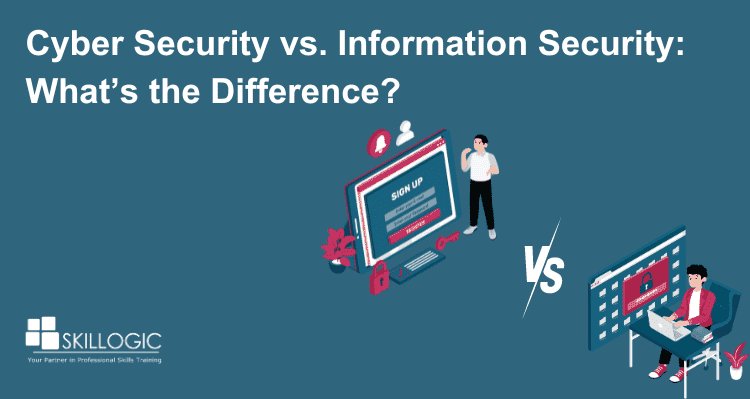
Cyber security and information security are closely related, but they are not exactly the same. Information security (InfoSec) is the broader discipline focused on protecting information from unauthorized access, alteration, disclosure, loss, or destruction, whether that information is stored digitally or physically. Cyber security is more focused on protecting digital systems, networks, devices, applications, and data from cyber threats such as malware, phishing, ransomware, and unauthorized access.
Understanding this distinction is important for businesses and professionals because effective security requires both technical safeguards and strong policies, processes, and access controls.
In this guide, we’ll explain the key differences between cyber security and information security, their areas of overlap, common examples, and how the two fields work together to protect valuable information and digital assets.
What Is Cyber Security?
Cyber security is the practice of protecting digital systems, networks, and devices from cyberattacks. Its primary goal is to defend against external threats, including hackers, malware, ransomware, and phishing attempts. In essence, cyber security focuses on safeguarding data and systems from unauthorized access or damage in the digital realm.
Key Components of Cyber Security:
- Network Security: Protects an organization’s network from both internal and external intrusions.
- Cloud Security: Secures data stored in the cloud, preventing breaches and mitigating vulnerabilities.
- Application Security: Ensures that software applications are free from security loopholes that could be exploited.
- Incident Response and Recovery: Involves responding to cyber security breaches and working to recover affected systems and data.
- Endpoint Security: Protects devices such as laptops, desktops, smartphones, and servers from malware, unauthorized access, and other endpoint-related threats.
- Identity and Access Management (IAM): Ensures that users have appropriate access to systems and data based on their roles, using controls such as authentication and multi-factor authentication.
- Security Monitoring and Threat Detection: Continuously monitors networks, systems, and applications to identify suspicious activity and potential security incidents.
- Data Security: Protects sensitive digital information from unauthorized access, modification, disclosure, or loss through measures such as encryption, access controls, and secure backups.
Together, these components create a comprehensive cyber security strategy designed to reduce the risk of cyberattacks and data breaches. As the world becomes more connected, cyber security training institute is increasingly important for individuals and businesses alike to understand and manage the evolving threat landscape.
Example Scenarios in Cyber Security:
- Preventing Ransomware Attacks: Cyber security strategies employ tools like antivirus software, encryption, and network monitoring to prevent ransomware from seizing control of systems.
- Securing Digital Infrastructure: Implementing firewalls, multi-factor authentication, and intrusion detection systems helps protect a company’s network and servers from cyber threats.
As the demand for digital protection grows, enrolling in a cyber security course can be an excellent way to equip yourself with the necessary skills to safeguard against these threats. Cyber security training provides individuals with hands-on experience in identifying and preventing cyberattacks.
cyber security is a vital component of today’s digital defense strategies. By focusing on protecting systems and data from external attacks, cyber security plays a critical role in keeping both individuals and organizations safe. Whether you're looking to pursue a cyber security course or simply want to enhance your understanding of digital protection, investing in cyber security training is a proactive step toward a more secure future.
Refer these articles:
- Top Cybersecurity Threats in 2024: What You Need to Know
- How to Prevent Phishing Attacks: Best Practices for 2026
- Top 7 Cybersecurity Certifications to Boost Your Career
What Is Information Security?
Information Security (often called InfoSec) is broader than cyber security. It focuses on protecting all forms of information—whether physical or digital. The primary goal of InfoSec is to ensure the confidentiality, integrity, and availability (CIA triad) of data, meaning that information remains secure, accurate, and accessible only to authorized individuals.
Key Components of Information Security:
- Physical Security: Protecting tangible assets like paper documents, hardware, and servers from unauthorized access or damage.
- Access Control and Encryption: Ensuring only authorized personnel can access sensitive data, whether through digital encryption or physical locks.
- Policies and Procedures: Establishing guidelines for how information is handled, accessed, and shared to ensure consistent protection.
- Risk Management: Identifying information security risks, assessing their potential impact, and implementing appropriate controls to reduce those risks.
- Data Classification: Categorizing information based on its sensitivity and importance so that appropriate security measures can be applied to each type of data.
- Incident Management: Establishing processes to detect, investigate, contain, and recover from security incidents that may affect the confidentiality, integrity, or availability of information.
- Security Awareness and Training: Educating employees about security policies, phishing, password protection, social engineering, and safe data-handling practices.
Unlike Cyber Security, which is primarily concerned with external digital threats, information security encompasses broader controls that protect both physical and digital information from all types of cyber threats.
Example Scenarios in Information Security:
- Protecting Printed Documents: Storing sensitive documents in locked cabinets and ensuring only authorized individuals have access.
- Database Integrity and Backups: Implementing robust backup systems and access controls to ensure the integrity of a company's data.
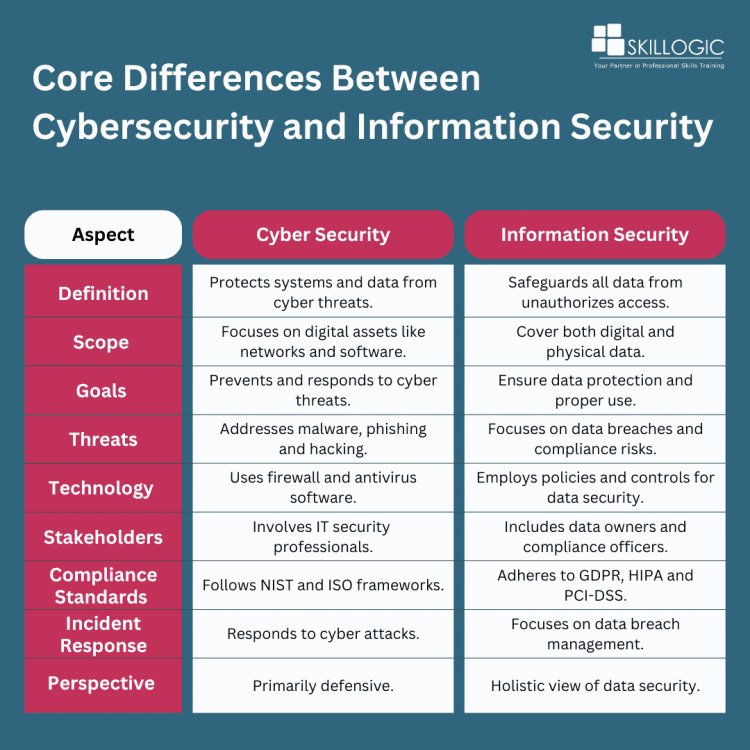
Core Differences Between Cyber Security and Information Security
Cybersecurity is primarily concerned with protecting computer systems, networks, and data from cyber threats and attacks. This includes defending against various forms of malicious activity that could compromise the integrity and availability of digital assets.
Information Security, on the other hand, focuses on safeguarding data itself, regardless of its format. This means protecting data from unauthorized access and disclosure, ensuring that sensitive information remains confidential and secure.
Scope
- The scope of cybersecurity is largely digital, dealing with assets such as hardware, software, networks, and the internet. It focuses on the protection of systems and networks from cyber threats that can affect digital environments.
- In contrast, information security has a broader scope that encompasses both digital and physical data. It emphasizes the principles of confidentiality, integrity, and availability of information, regardless of whether that data is in digital form or stored in physical formats.
Goals
- The primary goal of cybersecurity is to prevent, detect, and respond to various cyber threats and vulnerabilities. This involves implementing defensive measures to protect systems from attacks and breaches.
- Information security aims to safeguard data from unauthorized access and ensure its proper use. This includes maintaining the security of information against theft, loss, or unauthorized sharing, thus preserving its integrity and confidentiality.
Threats
- Cybersecurity: Cybersecurity focuses on threats that target digital systems, networks, applications, devices, and online services. Common threats include ransomware, phishing, malware, credential theft, vulnerability exploitation, supply-chain attacks, and DDoS attacks. According to the 2026 Verizon Data Breach Investigations Report (DBIR), exploitation of vulnerabilities accounted for 31% of breaches, making it the leading initial access vector in the report. The report also found that ransomware was present in 48% of breaches.
- Information Security: Information security takes a broader approach to protecting information in both digital and physical forms. It addresses risks such as data breaches, insider threats, accidental disclosure, unauthorized access, data loss, improper data handling, and privacy or compliance violations. The 2026 Thales Data Threat Report found that 70% of organizations identify AI as a top data security risk, highlighting how emerging technologies are creating new challenges for protecting sensitive information and controlling access to organizational data.
Technology
- In the realm of cybersecurity, the use of technology is vital. This includes implementing tools and practices such as firewalls, intrusion detection systems, antivirus software, and encryption to protect digital assets and systems.
- Information security relies on policies, procedures, and controls designed to protect data. This includes implementing access controls, encryption techniques, and data classification methods to ensure that data is handled securely and appropriately.
Stakeholders
- Cybersecurity typically involves IT security professionals, network administrators, and cybersecurity analysts who are focused on implementing technical measures to protect systems and networks.
- Information security, on the other hand, includes a broader range of stakeholders such as data owners, compliance officers, and information security managers who oversee data protection policies and ensure compliance with regulations.
Compliance Standards
- Cybersecurity is often aligned with cybersecurity frameworks like the National Institute of Standards and Technology (NIST), ISO 27001, and the Center for Internet Security (CIS) Controls. These standards help organizations build robust cybersecurity programs.
- In contrast, information security typically adheres to standards focused on data protection, such as the General Data Protection Regulation (GDPR), Health Insurance Portability and Accountability Act (HIPAA), and Payment Card Industry Data Security Standard (PCI-DSS). These standards are crucial for ensuring data privacy and protection.
Incident Response
- Cybersecurity: Focuses on detecting, containing, and recovering from active threats such as ransomware, malware, phishing, and unauthorized access. According to IBM’s Cost of a Data Breach Report 2025, the global average cost of a data breach was $4.44 million.
- Information Security: Takes a broader approach to incidents involving information, including data breaches, accidental disclosure, data loss, and compliance issues. Response may include investigation, notification, data recovery, and corrective actions.
Perspective
- Lastly, the perspective of cybersecurity is primarily defensive, aiming to protect systems from external threats. Cybersecurity professionals implement measures to fend off attacks and ensure the security of systems.
- In contrast, information security takes a more holistic approach by looking at data security from all angles. This includes not only technical controls but also physical and administrative measures to protect data throughout its lifecycle.
Refer these articles:
- Cyber Security in India: What You Need to Know
- Why Cyber Security Course in India in 2024?
- Cyber Security Scope in India
How Cyber security Is Part of Information Security
Cyber security is not only a critical subset of information security, but also a field with a promising future. As technology advances and businesses increasingly adopt digital infrastructures, the demand for skilled cybersecurity professionals continues to grow. The future in Cyber Security holds significant potential, with opportunities in areas like artificial intelligence-driven security systems, cloud security, and the Internet of Things (IoT) security. Cyber security professionals must stay ahead of evolving threats such as ransomware, advanced persistent threats, and nation-state hacking attempts. By understanding the future in cyber security, organizations can invest in forward-looking strategies and maintain robust defenses against increasingly sophisticated cyberattacks.
Pursuing a Cyber Security certification is an essential step for professionals aiming to enhance their skills and stand out in the industry. Certifications such as Certified Information Systems Security Professional (CISSP), Cyber Security Professional, Certified Ethical Hacking Professional (CEHP), and CompTIA Security+ validate an individual’s expertise in protecting information systems and responding to security threats. With the growing demand for qualified cybersecurity professionals, earning a Cyber Security certification can boost career prospects and open doors to roles like security analyst, penetration tester, or security consultant. Additionally, these certifications equip professionals with a solid foundation in risk management, cryptography, and incident response, making them valuable assets to organizations.
In today's digital age, acquiring the right Cyber Security skills is crucial for effectively defending against cyber threats. Cyber security skills include knowledge in areas like network security, threat intelligence, vulnerability assessment, and secure software development. Professionals must also develop soft skills such as critical thinking and problem-solving, which are essential for identifying and mitigating security risks. Furthermore, with the growing use of cloud services and IoT devices, cybersecurity professionals need to stay updated on emerging trends and tools to protect against modern-day attacks. By continuously honing their cyber security skills, individuals can stay relevant in a rapidly evolving field, ensuring that organizations can mitigate risks and protect their critical data from breaches.
SKILLOGIC Cyber Security Professional Plus Course offers an exceptional opportunity to build critical skills and advance your career in Cyber Security. Accredited by IIFIS and NASSCOM FutureSkills, the course combines industry-recognized credentials with hands-on experience, real-time projects, and exclusive practice labs. Join a community of over 100,000 learners and secure your future in cyber security with SKILLOGIC Institute.