Can B.Tech Students Start a Career in Cyber Security in Pune
Can B.Tech students start a career in cyber security in Pune? Explore career opportunities, skills, certifications, job roles, and training options for B.Tech graduates.
 Nashid Hussain CN
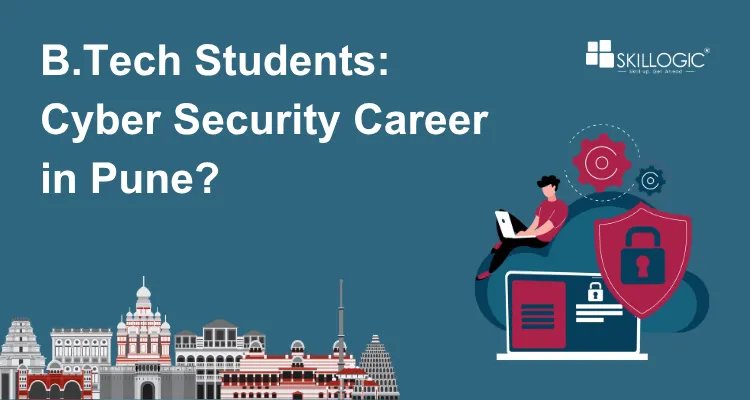
Yes, B.Tech students can start a career in cyber security in Pune. With a strong foundation in technology, practical training, and the right technical skills, engineering graduates can explore various opportunities in the cyber security industry. As businesses increasingly depend on digital systems, cloud platforms, and online services, protecting sensitive information from cyber threats has become an important priority.
Pune is one of Maharashtra's major IT and technology hubs, offering opportunities across IT services, software development, banking, manufacturing, and consulting. Students planning a cyber security career for B.Tech students in Pune can benefit from the city's growing technology ecosystem. By developing skills in networking, programming, ethical hacking, and security monitoring, graduates can prepare for entry-level security roles and build a strong foundation for long-term career growth.
Here, we will explore cyber security career opportunities, essential skills, and training options for B.Tech students in Pune.
Why B.Tech Students Are Suitable for Cyber Security Careers in Pune
Why are B.Tech students suitable for cyber security careers in Pune? B.Tech graduates can use their knowledge of programming, networking, and operating systems to enter the cyber security field. For example, a computer science graduate can learn security monitoring and work towards an entry-level SOC analyst role with the right practical training.
A B.Tech syllabus often covers programming, computer networks, databases, and operating systems. These subjects provide a strong foundation for understanding how digital systems work and how they can be protected. Students can build on this knowledge by learning cyber security tools, identifying vulnerabilities, and practising threat detection.
Moving from engineering to cyber security can be a natural career progression for graduates interested in technology and problem-solving. Students from computer science, information technology, electronics, and other engineering branches can explore this field by developing relevant technical skills and gaining hands-on experience.
Growing Demand for Cyber Security Skills in India
Industry research highlights the need for skilled cyber security professionals across businesses and technology service providers.
According to the Indian Cyber Security Skilling Landscape Report 2025–2026, published by the Data Security Council of India (DSCI) and SANS Institute, 73% of enterprises and 68% of service providers reported limited availability of skilled cyber security candidates. The report also found that 63% of enterprises and 59% of service providers reported gaps in candidates' practical skills.
These findings highlight why B.Tech graduates should combine their academic knowledge with hands-on learning. Practical projects, security laboratories, and experience with industry tools can help students prepare for employer expectations.
Read the Indian Cyber Security Skilling Landscape Report 2025–2026 for more details.
Source: Data Security Council of India (DSCI)
Pune is a major IT hub in Maharashtra, with technology companies in areas such as Hinjawadi, Kharadi, and Magarpatta. As businesses focus on protecting their digital systems and data, B.Tech graduates can explore cyber security opportunities in security operations, vulnerability assessment, and network security by developing practical skills.
Explore these articles:
- Network Security Fundamentals: Beginner’s Guide
- How to Start a Career in Cyber Security
- Application Security Engineer Career Guide
Cyber Security Career Paths and Job Opportunities After B.Tech in Pune
What are the cyber security job opportunities for B.Tech graduates in Pune? B.Tech graduates can explore various cyber security roles, including SOC analyst, cyber security analyst, ethical hacker, vulnerability assessment analyst, cloud security associate, and network security engineer. Each role involves different responsibilities, allowing graduates to choose a career path based on their technical skills and interests.
Security Operations Centre Analyst
A Security Operations Centre (SOC) analyst monitors security alerts, investigates suspicious activities, and helps organisations detect potential cyber attacks. This role requires knowledge of networking, log analysis, and SIEM tools.
Cyber Security Analyst
Cyber security analysts identify security risks, monitor systems, investigate incidents, and help businesses protect their digital assets.
Ethical Hacker and Penetration Tester
Ethical hackers test websites, applications, and networks with proper authorisation to identify vulnerabilities before malicious attackers can exploit them.
Vulnerability Assessment Analyst
These professionals scan systems for security weaknesses, assess risks, and recommend solutions to improve an organisation's security.
Cloud Security Associate
Cloud security associates help protect cloud platforms, applications, and stored data by managing access controls and identifying configuration weaknesses.
Network Security Engineer
Network security engineers protect computer networks by managing firewalls, monitoring network traffic, and preventing unauthorized access.
The availability of these opportunities depends on employer requirements and experience levels. B.Tech graduates can improve their prospects by developing relevant technical skills, completing practical projects, and gaining industry-recognised certifications. What is the average cyber security salary in Pune? According to Glassdoor, cyber security professionals in Pune can earn around INR 4 to 10 LPA, depending on their role, experience, skills, and organisation.
Skills and Certifications Needed to Start a Cyber Security Career in Pune
A successful career requires more than a degree or certificate. Students need a combination of technical fundamentals, practical experience, analytical thinking, and continuous learning.
What Cyber Security Skills Are Needed for a Career
- Networking: Understand IP addresses, TCP/IP, DNS, HTTP/HTTPS, ports, routing, and firewalls. These concepts help explain how systems communicate and where security problems can occur.
- Linux and operating systems: Learn basic Linux commands, file permissions, user accounts, processes, and system logs. Windows security fundamentals are also valuable.
- Programming: Develop basic Python skills to automate simple tasks, process logs, and understand security scripts. Knowledge of programming languages such as C, Java, or JavaScript can also help, depending on the chosen specialisation.
- Security fundamentals: Study authentication, access control, encryption, malware, phishing, vulnerability management, and incident response.
- Security tools: Gain supervised, hands-on experience with tools such as Wireshark, Nmap, and appropriate SIEM platforms. Learn what each tool does and how to interpret its results.
Students should practise security testing only in authorised environments, such as training laboratories or systems for which they have explicit permission.
What Cyber Security Certifications Are Useful for B.Tech Students
A relevant cyber security certification can help B.Tech graduates strengthen their technical knowledge and demonstrate their understanding of security concepts. Certifications in areas such as ethical hacking, SOC operations, pentration testing and vulnerability assessment, or cloud security can support different career goals.
However, students should choose certifications that include practical learning and industry-relevant skills rather than focusing only on the certificate. Combining certification with hands-on projects can make graduates better prepared for entry-level cyber security roles.
Explore these articles:
- Top Cyber Security Hiring Industries in Pune
- Top Cyber Security Job Opportunities in Pune
- Cyber Security Course Fees in Pune
In short, a cyber security career for B.Tech students in Pune can offer strong opportunities for graduates with the right technical and practical skills. The cyber security scope after B.Tech in Pune includes roles in SOC operations, ethical hacking, vulnerability assessment, network security, and cloud security. By learning the basics, gaining hands-on experience, completing relevant certifications, and continuously improving their skills, B.Tech graduates can build a rewarding cyber security career in Pune.
If you are a B.Tech graduate looking to build practical skills, a cyber security course in Pune can help you learn industry-relevant concepts through structured training, hands-on labs, and real-world projects. Choosing the right training programme can help you prepare for entry-level cyber security roles and take the next step towards your career goals.
SKILLOGIC also provides a top cyber security Program through its Cyber Security Professional Plus Course, helping students build practical skills in ethical hacking, SOC operations, penetration testing, and network security.
The course includes hands-on labs, real-time projects, and certifications from NASSCOM FutureSkills, IIFIS, and SKILLOGIC Course Completion Certificate. Students can explore SKILLOGIC's Cyber Security Class in Pune for industry-focused training and practical learning. With 25+ training centers across India, including Hyderabad, Bengaluru, Chennai, Pune, Mumbai, and Delhi, SKILLOGIC provides accessible training options for students looking to build a career in cyber security.