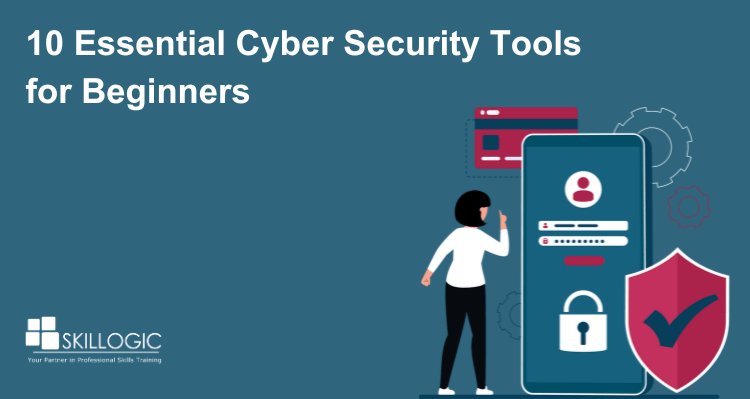
10 Essential Cyber Security Tools for Beginners
Discover 10 essential cyber security tools for beginners. Learn how these tools help you understand security, identify threats, and build practical skills.
 Nashid Hussain CN
Cyber security plays a critical role in protecting computers, networks, applications, and sensitive information from cyber threats. As attacks such as malware, phishing, ransomware, and unauthorized access continue to evolve, individuals and organizations need effective tools to identify vulnerabilities, monitor systems, and respond to security incidents. Cyber security tools such as Wireshark, Nmap, Metasploit, Burp Suite, and Splunk are widely used for tasks including network analysis, vulnerability assessment, penetration testing, and security monitoring. Learning how these tools work can help beginners build practical skills while giving security professionals better capabilities to detect and manage threats.
Let’s explore 10 essential cyber security tools, their key features, common use cases, and how they can help you develop practical skills in network security, vulnerability management, penetration testing, and threat detection.
The Scope of Cyber Security
Cyber Security professionals play a vital role in defending against digital threats by securing systems, networks, and sensitive information. Their responsibilities include detecting vulnerabilities, preventing unauthorized access, and mitigating risks to ensure the integrity and confidentiality of data. As cyber threats grow more sophisticated, the demand for skilled cyber security experts is increasing across industries.
The scope of cyber security is vast, covering areas like network security, data encryption, incident response, ethical hacking, and risk management.According to the ISC2 Cybersecurity Workforce Study, 59% of cybersecurity teams reported critical or significant skills needs, while 95% reported at least one skills need. AI was the most pressing skills gap, cited by 41% of respondents, followed by cloud security at 36%, presenting significant career opportunities in Cyber Security. Job roles range from entry-level positions like Security Analyst to more advanced roles like Penetration Tester, Security Architect, and Chief Information Security Officer (CISO).
Why is Cyber Security Important?
Every day, new vulnerabilities are discovered, and hackers become more sophisticated in their methods. With businesses moving online and people relying on digital platforms for everything from banking to healthcare, cyber security is critical for:
- Protection of Sensitive Data: Cyber Security helps safeguard sensitive information, such as personal data, financial records, and intellectual property. Breaches can lead to identity theft, financial loss, and reputational damage for both individuals and organizations.
- Preventing Financial Loss: Cyberattacks can result in significant financial losses for businesses and individuals. The costs of recovering from an attack, including downtime, loss of productivity, and potential fines, can be devastating. Effective Cyber Security measures help prevent these financial repercussions.
- Maintaining Business Continuity: A successful cyberattack can disrupt business operations, leading to downtime and loss of customer trust. Cyber Security ensures that businesses can continue functioning even in the face of cyber threats, protecting their reputation and customer relationships.
- Regulatory Compliance: Many industries are subject to regulations that require specific Cyber Security measures to protect data. Non-compliance can lead to legal consequences, fines, and loss of business licenses. Implementing strong Cyber Security practices helps organizations meet these legal obligations.
- Safeguarding against Emerging Threats: The cyber threat landscape is constantly evolving, with new vulnerabilities and attack vectors emerging regularly. Cyber Security practices help organizations stay ahead of these threats, adapting their defenses to protect against sophisticated attacks, such as ransomware, phishing, and advanced persistent threats (APTs).
- Building Trust and Reputation: For businesses, a strong Cyber Security posture fosters customer trust. Clients are more likely to engage with organizations that demonstrate a commitment to protecting their data. A single breach can lead to long-term reputational damage, while strong Cyber Security measures can enhance an organization's credibility.
A cyber security expert begins with understanding and using the right tools. Let's dive into the essential tools you’ll need as a beginner.
Refer: Why is Cybersecurity Important?
Importance of Cyber Security Tools
Whether you're a beginner aiming to grasp the fundamentals or an advanced learner pursuing a specialized role, gaining hands-on experience with cyber security tools is essential. Cyber Security tools not only enhance your ability to protect digital assets but also provide practical exposure to real-world threats. Enrolling in a reputable cyber security course introduces the core concepts, but practical training with tools is crucial for developing the necessary skills to address modern cyber risks.
Refer these articles:
- How to Start a Career in Cyber Security
- Cyber security vs. Information Security
- Top Cyber Security Threats
How to Choose Cyber Security Tools?
When choosing cyber security tools, it’s important to consider the following factors:
- Ease of use: As a beginner, you’ll want tools with intuitive interfaces and good documentation.
- Functionality: Make sure the tool covers the specific areas of cyber security you're focusing on, such as network security, web security, or malware detection.
- Community support: Open-source tools often have large communities that can provide help and resources.
- Scalability: Choose tools that can grow with your skills as you advance in your cyber security journey.
- Compatibility: Check whether the tool works with your operating system, network environment, and other security tools you already use.
- Cost: Consider whether the tool is free, open-source, or requires a paid license, especially if you are just starting out.
- Regular updates: Choose tools that are actively maintained and regularly updated to address new vulnerabilities and security threats.
- Security and reliability: Make sure the tool itself is trustworthy and has a good reputation in the cybersecurity community.
- Learning resources: Tools with tutorials, documentation, courses, and practical labs can make it easier for beginners to learn.
- Integration: For professional use, consider whether the tool can integrate with platforms such as SIEM, EDR, firewalls, or vulnerability management systems.
- Performance: Check how efficiently the tool handles large amounts of data, especially if you plan to use it in a business environment.
- Reporting: Good reporting and visualization features can help you understand findings and communicate security issues clearly.
Researching tools and enrolling in a top cyber security course will help you gain hands-on experience with the most effective tools for your specific needs.
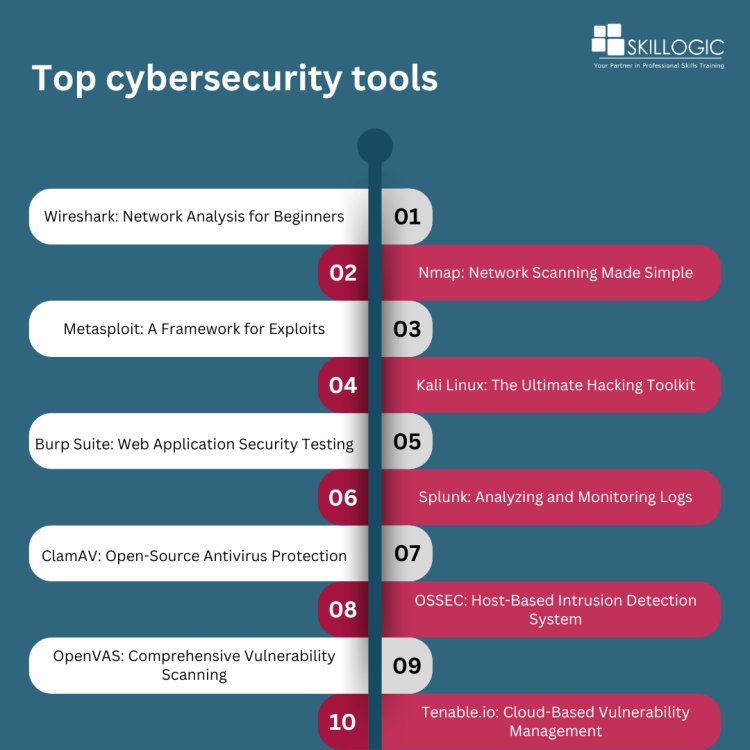
Top Cyber Security Tools
In this guide, we will explore the top 10 cyber security tools for beginners, helping you build a strong foundation in network security and understand how different tools are used to protect digital systems and information.
Government Guidelines and Cybersecurity Tools: Indian cybersecurity guidelines also emphasize the importance of security monitoring, auditing, vulnerability management, incident response, and log analysis. CERT-In's Guidelines on Information Security Practices for Government Entities recommend implementing appropriate cybersecurity controls, while its 2022 directions require organisations to maintain ICT system logs for 180 days. These requirements highlight the practical importance of tools such as Nmap, Wireshark, vulnerability scanners, SIEM platforms, IDS/IPS, and endpoint security solutions in cybersecurity monitoring and assessment.
1. Wireshark: Network Analysis for Beginners
Wireshark is widely regarded as one of the most popular tools for analyzing network protocols. This open-source tool allows you to capture and analyze data packets traveling over a network. As a beginner, Wireshark is an invaluable tool for understanding how data moves and identifying potential security vulnerabilities.
Wireshark is widely used by networking and cybersecurity professionals. According to the official Wireshark website, the tool receives more than 20 million downloads annually and has an active community of over 100,000 contributors.
Key features of Wireshark include:
- Packet capture: View the raw data packets transmitted across a network.
- Real-time analysis: Monitor network traffic in real-time to spot anomalies.
- Protocol analysis: Decode hundreds of different protocols.
Learning how to use Wireshark during your cyber security training Institute will provide you with insight into network behavior, helping you troubleshoot issues and detect security threats.
2. Nmap: Network Scanning Made Simple
Nmap (Network Mapper) is a robust open-source tool used for discovering hosts and services within a network. It’s widely used for network scanning, mapping, and security auditing. For beginners, Nmap provides a hands-on approach to understanding how networks are structured and identifying potential vulnerabilities.
According to OpenLogic’s survey of open-source security tools, Nmap was selected by 21.39% of respondents, making it one of the most widely selected open-source security tools in the survey. This highlights its continued relevance for network discovery, security testing, and auditing.
Nmap’s key functions include:
- Port scanning: Identify which services are running on which ports.
- Host discovery: Discover devices connected to a network.
- Service/version detection: Determine the version of software running on a network service.
Nmap is an essential tool for penetration testing and can be easily integrated into any cyber security certification course for practical learning.
3. Metasploit: A Framework for Exploits
Metasploit is an open-source penetration testing framework that enables cyber security professionals to find, exploit, and validate vulnerabilities in systems. This tool is often included in advanced cyber security training programs because of its extensive library of exploits and payloads.
Metasploit offers:
- Vulnerability scanning: Identify weaknesses in your network.
- Exploit execution: Simulate real-world attacks to test system security.
- Payload deployment: Customize payloads for advanced penetration testing.
For beginners, Metasploit provides a guided experience in exploiting vulnerabilities and understanding how hackers might attack your systems.
4. Kali Linux: The Ultimate Hacking Toolkit
Kali Linux is a tailored Linux distribution designed specifically for penetration testing and security assessments. It comes pre-installed with a vast range of cyber security tools, making it an all-in-one platform for cyber security beginners.
Kali Linux key functions include:
- Penetration Testing: Comes with tools like Metasploit and Nmap, allowing users to test the security of systems and networks.
- Forensics: Tools for digital forensics and data recovery, helping cyber security professionals analyze compromised systems.
- Exploitation Tools: Includes multiple tools for simulating attacks and finding vulnerabilities in real-world scenarios.
- Password Cracking: Contains tools like John the Ripper, which are used to test the strength of password protections.
- Network Analysis: Tools like Wireshark come pre-installed, enabling users to monitor and analyze network traffic.
Kali Linux is widely used by professionals and students alike, and it's often recommended for those enrolled in top cyber security courses or training programs.
5. Burp Suite: Web Application Security Testing
Burp Suite is a powerful platform designed for assessing the security of web applications. Beginners can use Burp Suite to identify vulnerabilities in web apps and learn how to exploit them safely. Burp Suite is an important tool in the arsenal of anyone interested in web security.
Key features include:
- Proxy: Capture and alter HTTP requests and responses.
- Scanner: Automatically find security vulnerabilities in web applications.
- Intruder: Perform automated attacks to test security measures.
As web application vulnerabilities are a major target for cyberattacks, learning Burp Suite will greatly enhance your understanding of web security.
6. Splunk: Analyzing and Monitoring Logs
Splunk is a robust platform designed for searching, monitoring, and analyzing data generated by machines. This tool helps beginners in cyber security by providing insights into security events through log analysis. Splunk is often used for incident response, helping you identify and mitigate cyber threats in real-time.
Key Splunk features include:
- Real-time monitoring: Keep an eye on logs and events as they happen.
- Incident management: Respond to security incidents with structured workflows.
- Data visualization: Create visual reports and dashboards to spot trends.
Splunk is an essential tool for learning how to handle security incidents, making it a key component of practical cyber security training.
7. ClamAV: Open-Source Antivirus Protection
ClamAV is an open-source antivirus tool that helps detect malware and viruses. For beginners, ClamAV offers a straightforward introduction to malware detection and removal. While it may not be as feature-rich as some commercial products, it’s a valuable tool for learning the basics of malware defense.
Key features of ClamAV include:
- Cross-platform compatibility: Compatible with Windows, macOS, and Linux.
- Real-time protection: Scan files in real-time for malware.
- Signature-based detection: Identify known viruses through signature databases.
Incorporating ClamAV into your cyber security toolkit will provide you with hands-on experience in defending against malware.
8. OSSEC: Host-Based Intrusion Detection System
OSSEC is an open-source host-based intrusion detection system (HIDS) that monitors and analyzes system activity to detect potential security breaches. For beginners, OSSEC is an excellent tool for learning how to secure endpoints.
Key OSSEC features include:
- Log monitoring: Analyze logs to identify potential suspicious activity.
- File integrity checking: Ensure that critical files have not been tampered with.
- Rootkit detection: Identify and remove rootkits from a system.
OSSEC is an important tool for learning how to protect endpoints and monitor for insider threats.
9. OpenVAS: Comprehensive Vulnerability Scanning
OpenVAS (Open Vulnerability Assessment Scanner) is an open-source tool for scanning networks and systems for vulnerabilities. For beginners, OpenVAS provides a comprehensive platform for learning how to identify security weaknesses across your infrastructure.
Key OpenVAS features include:
- Vulnerability detection: Scan networks for known vulnerabilities.
- Regular updates: Stay informed with frequent vulnerability database updates.
- Detailed reports: Generate reports that outline vulnerabilities and recommend fixes.
Using OpenVAS in your cyber security training will help you understand how vulnerabilities are discovered and remediated.
10. Tenable.io: Cloud-Based Vulnerability Management
Tenable.io is a cloud-based platform for managing vulnerabilities across an organization’s network. It provides visibility into your security posture and helps you manage risks effectively. Beginners can use Tenable.io to learn about cloud security and how vulnerabilities are managed at scale.
Tenable.io features include:
- Continuous monitoring: Track your systems for vulnerabilities in real-time.
- Risk scoring: Prioritize vulnerabilities based on their potential impact.
- Cloud integration: Monitor cloud environments for security risks.
Tenable.io is an excellent tool for understanding vulnerability management in complex, cloud-based environments.
Refer these articles:
- How to Become a Cyber Security Expert in India
- Why Cyber Security Course in India in 2026
- Cyber Security Course Fee in India
How Do Free Cyber Security Tools Work?
Free cyber security tools provide a valuable starting point for beginners. Many open-source tools, like Wireshark and Nmap, offer robust functionality without the need for paid licenses. These tools are typically maintained by communities of developers, who frequently release updates and patches to address new cyber security threats.
While free tools are great for learning, they may not always offer the full functionality of premium versions. However, they provide an accessible entry point into cyber security, especially for those taking their first steps in the field through cyber security training.
In the rapidly evolving field of cyber security, mastering the essential tools is a critical first step. By starting with these beginner-friendly tools, you’ll be better equipped to detect, prevent, and respond to cyber threats. As you advance, consider enrolling in a top cyber security course to deepen your knowledge and build a rewarding career in cyber security.
At SKILLOGIC Institute, we recognize the critical role that cyber security tools play in today’s digital environment. Our Cyber Security Professional Plus Course is meticulously designed to equip learners with the essential skills needed to effectively utilize various cyber security tools and tackle the unique challenges they may encounter. Accredited by esteemed organizations such as IIFIS and NASSCOM FutureSkills, this program offers comprehensive training that integrates real-time projects and exclusive practice labs. This hands-on experience ensures that participants not only familiarize themselves with these tools but also develop a deep understanding of how to implement them to protect systems from potential threats.
With a thriving community of over 100,000 empowered learners, SKILLOGIC is committed to enhancing careers in cyber security by providing high-quality education and practical skills. Our emphasis on real-world applications and industry-recognized certifications makes us a top choice for professionals looking to excel in the ever-evolving field of cyber security. Join us to equip yourself with the knowledge and expertise necessary to navigate the landscape of essential cyber security tools effectively.