What is the Disparity between Ethical and Unethical Hacking?
Understand the disparity between ethical and unethical hacking, including their purpose, authorization, legality, methods, risks, and impact on organizations.
 Aiswarya N
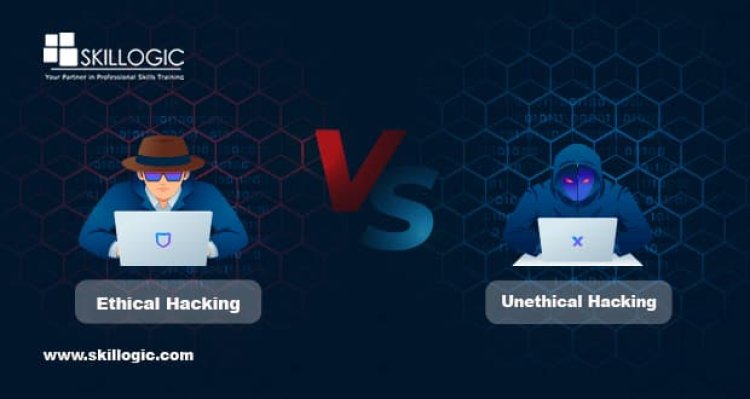
Cyber threats are becoming more complex as businesses and individuals increasingly depend on digital systems, networks, and online communication. Understanding the difference between ethical and unethical hacking is essential for protecting sensitive information and reducing security risks.
According to PwC’s 2026 research, 60% of business and technology leaders rank cyber risk investment among their top three strategic priorities amid ongoing geopolitical uncertainty and rapid technological developments.
Here, we will explore what hacking, ethical hacking, and unethical hacking mean, how they differ, and the role of ethical hackers in protecting digital systems.
How do data and messages leave the systems and phones? How safe is our personal information? Is it possible that the networks that surround us have been intentionally hacked and are in the hands of criminals?
Digital space is a completely different arena in today’s tech-savvy world. Exponentially large amounts of data are now being stored across computers and network systems. This massive amount of data is what fuels digital operations. A significant portion of stored data is sensitive and confidential, and businesses take great care to protect it. To develop a good defence against malicious attacks, systems are locked with passwords and other security procedures.
Refer these articles:
- How to Become a Cyber Security Analyst in 2026
- How Much Does It Cost to Learn Ethical Hacking in 2026
- Top SIEM Tools in Cybersecurity and How They Work
What is Hacking?
Hacking is an attempt to gain access to a computer system or a private network within a computer. It’s just gaining unauthorised access to or control of computer network security systems in order to commit a crime.
Watch this video: Biggest Cyber Attacks in the World
What is Ethical Hacking?
Hacking is done by companies to identify any potential dangers to a computer system or network. This sort of hacking entails the use of technological understanding as well as instruments similar to those used by unethical hackers. Ethical hacking, on the other hand, is circumventing the security system in order to get legitimate access to a company’s network. Companies are now recruiting cyber security professionals to bolster up their defence systems as the number of cyber-attacks in the country rises.
Professional hackers with competence in the field of cyber security who hack for government and official organisations are known as white hat hackers. They are certified hackers who assist IT firms in resolving their problems. White Hat Hackers use ethical hacking techniques in their work.
What is Unethical Hacking?
Black Hat Hackers are talented programmers who, like White Hat Hackers, are cybersecurity specialists but hack for malicious purposes. Such hackers gain illegal access to devices by infiltrating the system. Black Hat hackers are primarily illegal and work for personal benefit. The black hat hackers try to slither into and appropriate personal and sensitive information from people and businesses.
Grey Hat Hackers are a type of hacker who falls somewhere between White Hat and Black Hat. While White Hat Hackers work with the best of intentions and within the law, Black Hat Hackers work for the wrong reasons, and Grey Hat Hackers work for both good and bad reasons. Grey Hat Hackers are mostly interested in having fun and discovering security flaws in enterprises.
The growing number of connected devices is also expanding the potential attack surface for cybercriminals. According to IoT Analytics' Connected Device Forecast, the global Internet of Things (IoT) landscape is projected to reach 52.9 billion connected endpoints by 2035, with enterprise applications accounting for 69% of connections. As connected devices continue to expand across businesses and industries, organizations need stronger security measures such as network segmentation and protection for long-life industrial systems to reduce potential attack risks.
Difference Between Ethical Hacking and Unethical Hacking
Although ethical and unethical hacking may involve similar technical knowledge and security-testing techniques, the two differ fundamentally in authorization, intent, legality, scope, and outcome. The same vulnerability-testing skill can be used to strengthen a system when performed with permission or cause harm when carried out without authorization.
Here are the key differences between ethical hacking and unethical hacking:
1. Authorization
Ethical hacking is performed only after receiving permission from the system owner or organization. The ethical hacker works within an agreed scope that defines which systems, applications, networks, or devices can be tested.
Unethical hacking involves accessing or attempting to compromise systems without the owner's permission. Even if the person claims to be testing security, unauthorized access can create legal and security risks.
2. Intent
The primary purpose of ethical hacking is to identify security weaknesses and help organizations fix them before malicious attackers can exploit them. Ethical hackers aim to improve the organization's overall security posture.
Unethical hackers, particularly black-hat attackers, exploit vulnerabilities for malicious or unauthorized purposes. Their objectives may include stealing information, financial fraud, disrupting services, deploying malware, or gaining unauthorized control over systems.
3. Legality
Ethical hacking is conducted within a legal and authorized framework. Professional penetration tests are generally performed under defined agreements that specify the testing scope, permissions, methods, and reporting requirements.
Unethical hacking involves unauthorized activities that may violate applicable cybercrime, privacy, or computer-access laws. The absence of malicious intent does not automatically make unauthorized security testing legal.
4. Scope of Testing
Ethical hackers follow a clearly defined testing scope. For example, an organization may authorize a penetration tester to assess a particular web application, IP range, cloud environment, or internal network while excluding production systems or sensitive assets.
Unethical hackers do not have such authorized boundaries. They may target systems, accounts, applications, or devices without the knowledge or consent of their owners.
5. Handling of Vulnerabilities
When an ethical hacker discovers a vulnerability, the finding is documented and reported to the authorized organization so that the security team can investigate and remediate it. Responsible disclosure is an important part of professional security testing.
An unethical hacker may exploit the same vulnerability instead of reporting it. The weakness could be used to steal data, maintain unauthorized access, damage systems, or support further attacks.
6. Impact on Organizations
The work of an ethical hacker can help organizations understand their security weaknesses, improve security controls, prioritize remediation, and reduce the likelihood of successful attacks.
Unethical hacking can result in data breaches, financial losses, service disruption, privacy violations, reputational damage, and other consequences for individuals and organizations.
7. Professional Responsibility
Ethical hackers are expected to maintain confidentiality, respect the agreed testing scope, protect sensitive information, document their findings accurately, and avoid unnecessary damage to systems.
Unethical hackers do not operate under the same professional responsibilities. Their activities can intentionally or unintentionally compromise the confidentiality, integrity, or availability of information and systems.
Refer these articles:
- How much is the Ethical Hacking Course Fee in India
- Ethical Hacking Scope in India
- Why E-Commerce Companies in India Need Ethical Hacking Experts
What is a Career Like to be an Ethical Hacker?
Companies are willing to pay enormous sums of money to keep their data and systems secure as cyber criminals become more sophisticated in their attacks. So, if you enjoy technology and want to pursue a job that will benefit you in the future, enrolling in a cyber security degree is a wonderful choice. Jigsaw Academy, for example, offers a variety of short-term cyber security courses as well as other programmes in data sciences, machine learning, and artificial intelligence.
Ethical hacking professional is a credential that people are earning these days in order to provide ethical hacking services to businesses. It’s a well-paying, respectable job option! SKILLOGIC Ethical Hacking Courses are of dual accreditation from NASSCOM FutureSkills, CompTIA and IIFIS.
SKILLOGIC is a cyber security training institute focused on practical, career-oriented learning in areas such as ethical hacking, cyber security, SOC operations, and penetration testing. The institute combines instructor-led training with hands-on labs, real-world projects, internship opportunities, and career assistance to help learners develop job-relevant cyber security skills.
Learn with SKILLOGIC Institute and gain practical exposure to ethical hacking concepts, security tools, and vulnerability assessment techniques.
Watch this video: Ethical Hacking Course Introduction