Cybersecurity Career Scope in 2026
Explore the cybersecurity career scope in 2026, including growing job opportunities, in-demand skills, career paths, and how professionals can build a successful future in cybersecurity.
 Aiswarya N

Cyber security has become one of the most important and fast-growing career fields in today’s digital world. As businesses, governments, and individuals increasingly depend on cloud platforms, connected devices, AI systems, and digital services, the need to protect data and prevent cyber threats continues to grow. According to MarketsandMarkets, the global cyber security market is projected to reach USD 351.92 billion by 2030, expanding at a Compound Annual Growth Rate of 9.1%. This steady growth highlights the rising demand for skilled cyber security professionals across industries.
Moving into 2026, organizations are increasing investments in cybersecurity talent to improve digital security and manage evolving cyber risks. As a result, cyber security continues to offer strong career opportunities, competitive salaries, and long-term growth. This guide explores cybersecurity career scope, key skills, industry demand, salary trends, and steps to build a successful career.
Why Pursue a Career in Cybersecurity?
Choosing a career in cyber security offers opportunities to work in a rapidly growing field that plays a critical role in protecting digital systems and sensitive information. This highlights why cyber security is important, as businesses, governments, and individuals depend on secure digital environments to prevent data breaches, cyberattacks, and operational disruptions. As organizations continue to strengthen their security infrastructure and manage evolving cyber threats, the demand for skilled professionals continues to increase. According to IMARC Group, the Indian cyber security market is projected to reach USD 44.0 billion by 2034, growing at a CAGR of 15.46% from 2026 to 2034, highlighting strong long-term career potential across industries.
Here are some key reasons why pursuing a career in cyber security can be a rewarding and future-ready choice in 2026:
- High Demand: As cyber threats evolve, so does the demand for skilled professionals who can combat these threats. Organizations across sectors are actively seeking cybersecurity experts to safeguard their digital assets.
- Career Growth: The cybersecurity field offers immense opportunities for career growth and advancement. With the rapid digital transformation globally, the need for cybersecurity professionals is projected to continue growing.
- Job Security: Unlike many other industries, cybersecurity professionals enjoy relatively high job security. The constant need for protection against cyber threats ensures a stable demand for qualified individuals.
- Challenging and Rewarding Work: Working in cybersecurity involves tackling complex challenges and staying ahead of cybercriminals. It's a dynamic field that provides a sense of fulfillment through protecting critical information.
Read these articles:
Is Cybersecurity a Good Career?
Cybersecurity offers a promising career path due to increasing digital threats and data breaches globally. Professionals in this field protect sensitive information, develop secure systems, and combat cybercrime. With growing demand across industries, ample opportunities exist for specialists in areas like network security, ethical hacking, and information assurance. Cybersecurity stands out as not only a good but also an excellent career choice for several reasons:
- Lucrative Opportunities: The cybersecurity industry offers competitive salaries and benefits due to the high demand for specialized skills.
- Global Relevance: Cyber threats transcend borders, making cybersecurity a universally relevant field with opportunities worldwide.
- Continuous Learning: The nature of cybersecurity requires professionals to stay updated with the latest technologies and threats, fostering ongoing professional development.
- Variety of Roles: From penetration testers to security analysts and ethical hackers, cybersecurity offers diverse career paths catering to different interests and skill sets.
- Job Security: Cyber security offers strong job stability as organizations must continuously protect their systems and data from evolving cyber threats. The persistent need for security professionals across industries ensures steady and long-term career opportunities.
Moving into 2026, the cyber security field continues its strong growth trajectory, creating new opportunities, career paths, and advancements for professionals across industries.
Skills required to Become Cyber Security Professional
Cybersecurity professionals require a blend of technical expertise and strategic thinking to protect digital systems from threats. Skills include proficiency in network security, encryption protocols, incident response, and vulnerability assessment. Critical thinking, problem-solving, and a deep understanding of emerging technologies are essential for mitigating risks and ensuring robust defense strategies. In 2026, a successful cyber security professional is expected to have a combination of technical expertise and soft skills, which include the following:
Technical Skills:
- Expertise in network security, cryptography, and secure coding principles.
- Knowledge of operating systems (e.g., Linux, Windows) and familiarity with cloud platforms.
- Ability to use cybersecurity tools such as firewalls, intrusion detection systems (IDS), and vulnerability assessment tools.
Soft Skills:
- Utilizing analytical reasoning and problem-solving abilities to recognize and address security threats.
- Communication skills to collaborate with teams and explain technical concepts to non-technical stakeholders.
- Being meticulous and taking initiative to anticipate upcoming risks.
- These skills can be further strengthened through structured learning programs, practical experience, and industry-recognized certifications from bodies such as IIFIS, NASSCOM FutureSkills, and CompTIA, which help professionals advance in their cyber security careers.
Read these articles:
- What is Cyber Security Professional Plus?
- Cyber Security Tips and Best Practices
- What is Phishing? Types of Phishing Attacks
Cyber Security across in Various Industries
In today's interconnected world, where digital transformation has revolutionized every sector, cybersecurity stands as a sentinel guarding against threats that lurk in the digital realm. From healthcare to finance, manufacturing to government, every industry faces unique challenges and vulnerabilities in the realm of cybersecurity. Let's explore how different industries are navigating this complex landscape to secure their digital assets and protect their stakeholders:
- Finance: Banks and financial institutions rely on robust cybersecurity measures to protect customer data and financial transactions.
- Healthcare: With the rise of telemedicine and digital health records, cybersecurity is essential to safeguard patient information.
- Government: Government agencies require cybersecurity professionals to defend national security and critical infrastructure from cyber threats.
- Retail and E-commerce: Online retailers must secure customer payment information and prevent data breaches.
- Technology: Tech companies need cybersecurity experts to protect intellectual property and maintain the integrity of software and hardware products.
Each sector presents unique challenges and opportunities for cybersecurity professionals to make a significant impact.
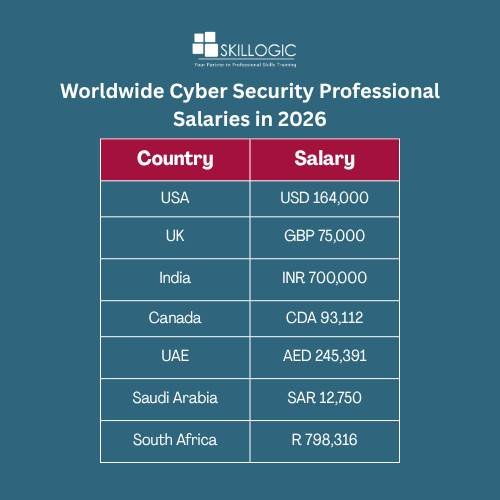
Worldwide Cyber Security Professional Salaries in 2026
As we move into 2026, the global cyber security job market continues to grow steadily, driven by rising cyber threats, stricter regulations, and the rapid adoption of digital technologies across industries. The cyber security salaries also vary across regions based on demand, experience levels, and local economic conditions.
Below is a breakdown of average cyber security salaries in 2026 across different countries and regions:
- United States: In the United States, the average annual salary for a Cyber Security Engineer is around $164,000, (Glassdoor)
- United Kingdom: In the United Kingdom, the average cyber security salary for a Cyber Security Engineer ranges from £40,000 to £75,000 per year(Glassdoor)
- India: The average salary for a Cyber Security Analyst in India is between ₹400,000 and ₹700,000 per year. Higher earnings possible for experienced professionals and those in specialized or senior roles (Glassdoor)
- Canada: In Canada, the average cyber security analyst salary is about $93,112 per year, and professionals in major cities or specialized roles typically earn higher pay, according to (Indeed)
- United Arab Emirates (UAE): In the United Arab Emirates, the average salary of cyber security professionals is around AED 245,391 per year. (Indeed)
- Saudi Arabia: The average salary for a Cyber Security Analyst is SAR 12,750 per month, with variations depending on experience, qualifications, and industry specialization (Glassdoor)
- South Africa: The average annual salary for a Cyber Security Engineer in South Africa is R 798,316. (Indeed)
Refer these articles:
- Cyber Security Course Fee in Chennai
- Cyber Security Course Fees in Bangalore
- Cyber Security Course Fee In Hyderabad
How to Prepare for a Cybersecurity Career
Cybersecurity has become a critical field, with professionals in high demand across various industries. Whether you're starting fresh or looking to transition into cybersecurity, here are some essential steps to help you prepare for a successful career in this dynamic and vital field:
- Education: Pursue a degree in cybersecurity, computer science, or related fields. Consider specialized courses and cybersecurity certifications like CISSP, CISM, or OSCP.
- Hands-on Experience: Gain practical experience through internships, cybersecurity competitions (CTFs), or volunteer work.
- Networking: Build connections with cybersecurity professionals through industry events, forums, and LinkedIn.
- Stay Updated: Continuously learn about new cyber threats, technologies, and industry best practices through online courses, webinars, and professional development opportunities.
By proactively developing skills and knowledge, aspiring cybersecurity professionals can position themselves for rewarding careers in the ever-evolving field of cybersecurity.
Cybersecurity careers in 2024 offer promising prospects fueled by increasing cyber threats and digital transformation. With the right skills, education, and certifications, individuals can embark on a fulfilling journey in protecting organizations and individuals from cyber risks. Whether you're considering a career switch or entering the job market for the first time, cybersecurity presents a dynamic and lucrative path forward.
SKILLOGIC offers comprehensive Cyber Security courses designed to equip professionals with advanced skills in protecting digital assets. The programs cover essential topics such as ethical hacking, network security, and incident response, ensuring students gain practical knowledge to combat cyber threats effectively. Additionally, SKILLOGIC provides a range of other courses including project management, IT service management, Business Analytics, and quality management. Each course is crafted to meet industry standards and enhance career prospects in today's competitive job market, making SKILLOGIC a preferred choice for professionals seeking to upgrade their skills across various disciplines.