
What Is a Fraud Detection System? How It Protects Businesses
Learn what a fraud detection system is, how it protects businesses from financial fraud, and why it's essential. Discover key benefits and improve security today.
 Nashid Hussain CN

Digital fraud is becoming a major challenge for businesses as online transactions, digital payments, and cloud services continue to grow. Cybercriminals use advanced methods such as payment fraud, identity theft, and account takeover attacks to steal money and sensitive information, leading to significant financial and reputational damage.
According to the Association of Certified Fraud Examiners (ACFE), organizations lose an estimated 5% of their annual revenue to fraud each year. To address these growing threats, businesses are adopting a fraud detection system that uses AI, machine learning, and real-time monitoring to identify suspicious activities, prevent financial losses, and protect customer trust.
In this blog, we'll explain what is a fraud detection system, how it works, its key features and benefits, the common types of fraud it prevents, and why it is essential for modern businesses.
What Is a Fraud Detection System?
A fraud detection system is a security solution that identifies, analyzes, and prevents suspicious activities that may indicate fraudulent behavior. It continuously monitors transactions, user activities, devices, and digital interactions to detect patterns that differ from normal behavior.
Unlike traditional cyber security tools that mainly focus on blocking cyberattacks, fraud detection solutions are designed to recognize financial crimes, identity fraud, payment fraud, insider threats, and account misuse before they cause significant damage.
Today, businesses use these systems across banking, e-commerce, healthcare, insurance, telecommunications, and fintech industries to reduce risks and improve operational security.
Modern fraud detection software combines multiple technologies, including:
- Artificial intelligence
- Machine learning
- Behavioral analytics
- Device fingerprinting
- Risk scoring
- Real-time monitoring
These technologies work together to identify suspicious transactions and either block them automatically or send alerts for further investigation.
Fraud Detection System Industry Statistics and Market Growth
The global demand for financial fraud detection solutions continues to grow rapidly as digital transactions increase worldwide.
According to MarketsandMarkets, the global Fraud Detection and Prevention (FDP) market is projected to grow from USD 32.00 billion in recent years to USD 65.68 billion by 2030, registering a CAGR of 15.5%. The market is expanding because of rising digital payments, AI-driven fraud attacks, stricter compliance regulations, and increasing adoption of cloud technologies.
Cybercrime is expected to cost businesses over USD 10 trillion annually, while increasing digital transactions and e-commerce continue to create more opportunities for fraud. IBM also reports that compromised credentials remain a leading cause of security incidents. These trends make automated fraud detection and prevention essential, as manual investigations alone are no longer sufficient to combat modern cyber attacks or threats.
Refer these articles:
- Network Security Fundamentals: Beginner’s Guide
- How to Start a Career in Cyber Security
- How to Become a Cyber Security Analyst
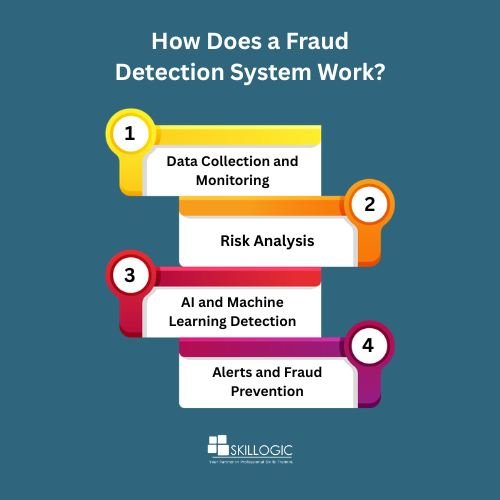
How Does a Fraud Detection System Work?
A fraud detection system uses predefined rules, artificial intelligence (AI), and machine learning (ML) to monitor transactions and user activities in real time. It detects unusual patterns, identifies potential fraud, and automatically flags or blocks suspicious activities, helping businesses prevent financial losses, protect sensitive data, and respond quickly to emerging threats.
Data Collection and Monitoring
The first step involves collecting data from multiple sources.
This may include:
- Transaction history
- Login activities
- Device information
- IP addresses
- User behavior
- Browser fingerprints
- Geographic locations
- Payment methods
The system continuously monitors these data points to establish normal customer behavior.
Risk Analysis
Once data is collected, the system compares current activities against predefined rules and historical patterns.
Examples include:
- Unusually large transactions
- Multiple failed login attempts
- Payments from unfamiliar countries
- Sudden changes in customer behavior
- Multiple accounts using the same device
Each activity receives a risk score based on its likelihood of being fraudulent.
AI and Machine Learning Detection
Modern ai fraud detection solutions use machine learning algorithms to recognize patterns that humans may miss.
Instead of relying only on fixed rules, AI learns from previous fraud cases and continuously improves its accuracy.
For example, AI can detect:
- Unusual purchasing habits
- Impossible travel scenarios
- Abnormal login times
- Suspicious device changes
- Hidden fraud patterns across thousands of transactions
This makes fraud detection much faster and more effective.
Alerts and Fraud Prevention
If suspicious behavior exceeds a predefined risk threshold, the system immediately takes action.
Possible responses include:
- Blocking transactions
- Requesting additional verification
- Sending alerts to security teams
- Freezing user accounts
- Triggering manual investigations
This process enables real-time fraud detection, helping businesses prevent fraudulent activities early, minimize financial losses, and strengthen overall security.
How Does a Fraud Detection System Work?
Common Types of Fraud Businesses Face
Businesses face various types of fraud depending on their industry and operations. Understanding these threats helps organizations strengthen security and reduce financial and reputational risks.
Payment Fraud
Payment fraud involves unauthorized or stolen payment methods used to complete transactions.
Common examples include:
- Credit card fraud
- Debit card fraud
- Fake payment gateways
- Chargeback fraud
Payment fraud is especially common in retail and e-commerce in cyber security, where attackers target online transactions, customer payment data, and digital storefronts.
Identity Theft
Cybercriminals steal personal information to impersonate legitimate users.
Stolen information may include:
- Passwords
- Government IDs
- Banking credentials
- Personal information
Identity theft often leads to financial fraud and account abuse.
Account Takeover Attacks
In these attacks, hackers gain unauthorized access to customer accounts using stolen passwords or phishing campaigns.
Once inside, attackers may:
- Transfer funds
- Change account settings
- Make unauthorized purchases
- Access confidential information
Insider Fraud
Not every fraud threat comes from external attackers.
Employees, contractors, or trusted partners may misuse their authorized access to steal money, manipulate financial records, or leak confidential business information.
Insider fraud is often difficult to detect without continuous monitoring.
E-commerce and Online Transaction Fraud
The rapid growth of digital shopping has increased the need for online fraud detection.
Examples include:
- Fake customer accounts
- Coupon abuse
- Refund fraud
- Friendly fraud
- Automated bot purchases
Businesses handling online payments must continuously monitor these activities.
Key Features of a Fraud Detection System
Modern fraud detection systems use advanced technologies to monitor transactions, identify suspicious activities, and prevent fraud in real time.
- Real-time transaction monitoring: Every transaction is analyzed instantly before approval.
- Artificial intelligence and machine learning: AI continuously improves fraud detection accuracy by learning from new attack patterns.
- Behavioral analytics: The system studies user behavior to identify abnormal activities.
- Device fingerprinting: It recognizes trusted and suspicious devices even if users change browsers or IP addresses.
- Risk scoring: Every transaction receives a fraud probability score.
- Automated alerts: High-risk activities automatically notify security teams.
- Reporting and analytics dashboard: Interactive dashboards help businesses monitor fraud trends, incidents, and overall security performance.
By combining these capabilities, organizations can improve fraud detection accuracy, minimize false positives, and protect both customer data and business operations.
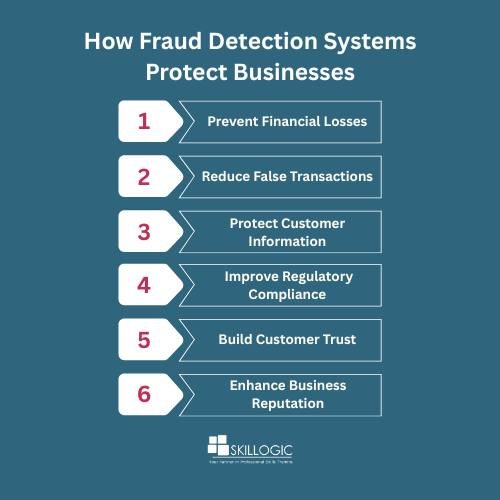
How Fraud Detection Systems Protect Businesses
A modern fraud detection system provides multiple layers of protection by continuously monitoring transactions and user activity. It detects suspicious behavior in real time, helping businesses prevent fraud and reduce financial losses.
Prevent Financial Losses
- Fraud detection systems identify suspicious activities before money is stolen.
- Early detection helps organizations avoid expensive financial damage.
Reduce False Transactions
- Advanced AI reduces unnecessary transaction declines by distinguishing genuine customers from fraudsters.
This improves approval rates while maintaining security.
Protect Customer Information
Sensitive customer data remains protected through continuous monitoring and threat detection.
Businesses can better safeguard:
- Personal information
- Banking details
- Payment credentials
- Customer identities
Improve Regulatory Compliance
Many industries must comply with regulations such as:
- PCI DSS
- GDPR
- AML requirements
- KYC regulations
Fraud detection solutions support compliance by monitoring suspicious financial activities and maintaining audit logs.
Build Customer Trust
- Customers are more likely to continue using businesses that demonstrate strong security practices.
- Secure transactions improve confidence and customer loyalty.
Enhance Business Reputation
- A major fraud incident can damage a company's reputation for years.
- Preventing fraud helps maintain brand credibility and customer satisfaction.
How Fraud Detection Systems Protect Businesses
Benefits of Implementing a Fraud Detection System
Organizations gain several long-term advantages after implementing modern fraud prevention technologies.
- Faster fraud identification: Automated monitoring detects threats within seconds rather than hours or days.
- Reduced operational costs: Automation reduces manual investigations and improves operational efficiency.
- Better customer experience: Legitimate customers experience smoother and safer transactions.
- Improved decision-making: Detailed fraud reports help management make better security and business decisions.
- Stronger cyber security posture: Fraud detection complements firewalls, endpoint protection, SIEM, and identity security, creating stronger overall cyber defense.
- Scalable protection for growing businesses: As transaction volumes increase, modern solutions continue protecting businesses without requiring significant manual effort.
By implementing a modern fraud detection system, businesses can strengthen security, minimize financial risks, and confidently support long-term growth in an increasingly digital landscape.
Refer these articles:
- Cyber Security in India: What You Need to Know
- Cyber Security Scope in India
- How to Become a Cyber Security Expert in India
Challenges in Fraud Detection
Although fraud detection technologies have advanced significantly, businesses still face several implementation challenges.
Evolving cyber threats
- Cybercriminals constantly develop new attack methods that bypass traditional security controls.
High false positive rates
- Overly strict detection rules may incorrectly block legitimate customer transactions.
- Finding the right balance between security and customer experience remains important.
Large volumes of data
- Large enterprises process millions of daily transactions, making accurate analysis increasingly complex.
Privacy and compliance concerns
- Organizations must collect enough data for fraud analysis while respecting privacy regulations.
Integration with existing systems
- Many businesses still use legacy infrastructure that can complicate deployment of advanced fraud detection platforms.
Future Trends in Fraud Detection Systems
The future of cyber security for fraud prevention will rely heavily on intelligent automation and predictive analytics.
AI-driven predictive analytics
AI will increasingly predict fraud before transactions occur.
Instead of reacting to attacks, businesses will proactively identify high-risk behaviors.
Behavioral biometrics
Future systems will analyze:
- Typing speed
- Mouse movements
- Touchscreen behavior
- Navigation habits
These unique characteristics make identity verification much stronger.
Real-time fraud intelligence
Organizations will share anonymized fraud intelligence to identify emerging threats more quickly.
Cloud-based fraud detection platforms
Cloud deployment allows businesses to scale protection quickly while reducing infrastructure costs.
Zero Trust security integration
Fraud detection platforms will become more integrated with Zero Trust architectures, continuously verifying users and devices before granting access.
Explainable AI for fraud investigations
Organizations increasingly require AI models that clearly explain why a transaction was flagged.
Explainable AI improves regulatory compliance and investigator confidence.
Refer these articles:
- Why Cyber Security Career in Bangalore
- Your Path to Becoming a Cyber Security Engineer in Hyderabad
- Cyber Security Course Fees in Pune
- Tips for Selecting the Top Cyber Security Institute in Chennai
In short, Digital fraud is becoming more sophisticated, making advanced fraud prevention essential for every organization. Understanding what is fraud detection system helps businesses see the value of using AI-powered, real-time monitoring to detect suspicious activities before they cause financial losses or data breaches. By investing in a modern fraud detection system, organizations can strengthen their cybersecurity, protect customer trust, meet compliance requirements, and ensure secure, reliable business operations in an increasingly digital world.
As the demand for fraud prevention and cyber security professionals continues to grow, enrolling in a cyber security course in Bangalore can help you build practical, job-ready skills.
SKILLOGIC is a leading institute for cyber security training, offering its industry-recognized Cyber Security Professional Plus Course, a 4-month program accredited by IIFIS and NASSCOM FutureSkills. The course provides hands-on labs, real-time projects, internship opportunities, and practical training in fraud detection, ethical hacking, SIEM, SOC operations, cloud security, and incident response. With 25+ training centers across India, including cyber security courses in Chennai, Bengaluru, Hyderabad, Coimbatore, Hyderabad, Mumbai, Ahmedabad, Nagpur, and Delhi, SKILLOGIC helps aspiring professionals build job-ready cyber security skills and prepare for successful careers in the field.